What Filipino market mornings feel like
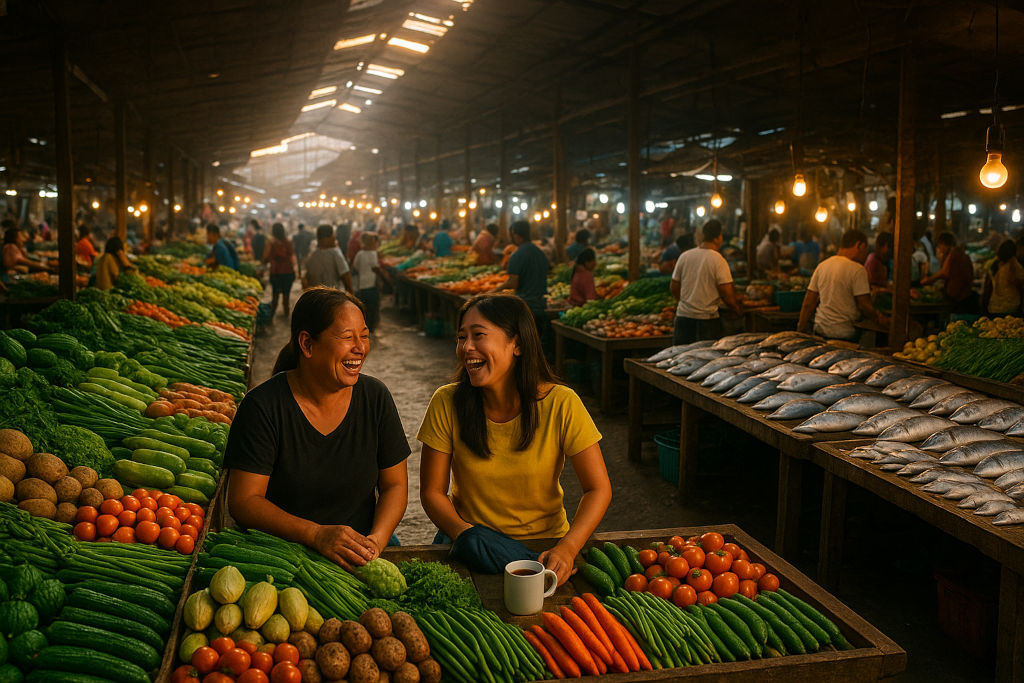
It’s barely 5:30 a.m. in Cubao and the sky is still a soft gray when the first jeepneys pull up by the market. You step down, half-asleep, and the air hits you: a mix of bangus on ice, frying garlic, damp concrete, and hot coffee drifting from a small stall at the corner. Fluorescent lights hum overhead, plastic basins clatter, and somewhere in the maze of stalls, a taho vendor sings out, “Tahooo!” This is the everyday magic of Filipino market mornings.
In these moments, the city isn’t quite awake yet, but the palengke already is. In one corner, a kuya stirs a huge kawa of lugaw, steam fogging his glasses. Beside him, a tita in an apron lays out fresh pandesal, the brown paper bag slowly turning translucent from the warmth. A fishmonger slams a cleaver through a slab of tuna, calling out prices in a mix of Tagalog and local slang. In the background, you hear vendors greeting their suki – loyal regular customers – like family.
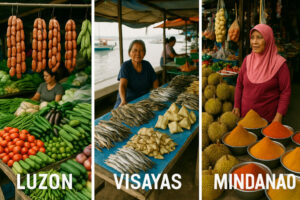 Whether you’re in a massive Metro Manila palengke, a cool mountain market in Baguio, a sunlit Visayan talipapa, or a coastal Mindanao fish port, Philippine market mornings share the same heartbeat: food, community, and the daily ritual of pamamalengke – the Filipino way of doing the market run. This guide wanders through different corners of Luzon, Visayas, and Mindanao to show you what these mornings feel like, what to eat, how much to spend, and how to move respectfully through this living, breathing part of Filipino life.
What is a palengke, and why mornings matter
A palengke is a traditional public market in the Philippines – usually covered, often chaotic, always full of life. Think of the classic wet and dry market combo: one section for slippery, tiled aisles with fish, meat, and fresh produce (the “wet” part), and another for rice, spices, dried goods, plastic wares, and everything from walis to school supplies (the “dry” section). If you’ve ever seen photos of a bustling traditional palengke definition in a city center, that’s the vibe.
Beside big palengke complexes, you’ll also find talipapa – smaller, often more improvised roadside markets or neighborhood clusters of stalls. These pop up near tricycle terminals, barangay halls, or even church gates, especially on market days. Both are essential to daily life; they’re where people buy ingredients for breakfast, baon, and ulam for the day.
Palengke culture is tied to early mornings. That’s when the freshest catch from the nearby coast arrives, the newly harvested gulay from upland farms is delivered, and butchers lay out cuts before the day’s heat fully sets in. Pamamalengke starts before sunrise for many nanays and lolas, who want first pick of the isda and the best deals before crowds thicken. This is also when Philippine wet market mornings feel most alive: vendors shouting prices, scales clanging, water continuously splashing across the floor as stalls are washed down.
Morning is also when suki relationships are renewed: a little extra sibuyas here, an extra scoop of sabaw there, or a discount just for “Ate, ikaw pa ba?” Over time, these small rituals turn a simple morning market in the Philippines into a web of relationships and stories – especially visible in Filipino palengke mornings when everyone seems to know everyone’s business and breakfast order.
Luzon market mornings
Metro Manila dawn: Cubao, Quiapo, and city rush
In Metro Manila, Philippine market mornings often start in places like Farmers Market in Araneta City, Cubao. Under its high roof, vendors are already stacking bangus, tilapia, and pusit on beds of crushed ice by 4 a.m. The air is cool, almost chilly, from all the ice and fans. Loud banter flies across the aisles: “Ate, sariwa pa ’to, kagabi lang huli!” One stall sells crabs, claws tied in neat rows, while another piles up green mangoes as tall as a small child.
Farmers is one of those places you can look up on a map – it’s even on Wikipedia as the famous Farmers Market in Cubao – but its soul is in the details: the vendor who recognizes your face after two visits, the panaderia at the edge selling pandesal and Spanish bread, the tiny carinderia serving tapsilog that tastes like your tita’s recipe. This is where you can fully feel urban Filipino market mornings: busy but strangely comforting.
Elsewhere in the city, Quiapo and Divisoria come alive in similar ways. You might do pamamalengke for gulay and isda, then hop over to Chinatown for dim sum and lumpia. It’s easy to turn it into a mini adventure – pairing your morning market run with a Binondo food trip in Manila Chinatown if you want to see how Filipino and Chinese food cultures blend before lunch even begins.
Baguio Public Market: cool air and coffee steam
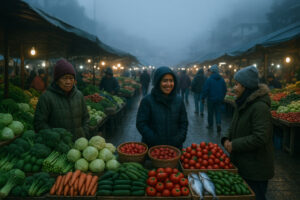 Head north and the mood shifts. In Baguio Public Market, your breath might fog the air if you arrive early enough. The floor is damp but the cool mountain breeze makes it feel softer than the sticky heat of lowland palengke. Vendors here arrange their produce like living art: tight bundles of pechay, carrots with feathery tops, deep green broccoli, and rows of strawberries, some destined for jam, some for tourists’ pasalubong boxes.
In this corner of Luzon markets, you’ll find longganisa stalls hanging strings of garlicky sausages like ornaments. Coffee sellers grind Benguet beans on the spot, filling the air with a roasty aroma that mixes with the smell of tinapa and freshly cut cabbage. Philippine market mornings here lean slower; people stop to warm their hands around a cup of barako coffee before heading to work or class.
You can start your day with a simple meal: hot champorado with tuyo, or a silog plate topped with fragrant local longganisa. If you’re planning a whole weekend, it’s easy to fold your market run into a bigger escape using a Baguio itinerary for art, markets, and mountain escapes, so your pamamalengke is part of a bigger cool-air reset.
Provincial Luzon markets: Pampanga and Batangas mornings
In Pampanga, often called the culinary capital of the Philippines, morning markets are playgrounds for serious home cooks. At a public market in Angeles or San Fernando, you’ll see rows of tocino, longganisa, and tapa glowing a little red under the lights, ready to become hearty breakfasts. Kapampangan nanays scan the meat stalls with sharp eyes, comparing cuts and whispering to their suki. A carinderia at the back ladles out huge bowls of lugaw with tokwa’t baboy, each bowl topped with calamansi and spring onions.
Meanwhile, in Batangas, provincial palengke mornings revolve around bulalo bones, tawilis, and barako coffee. Fishermen from nearby coastal towns come in with tubs of tulingan and galunggong, while a lolo roasts kapeng barako in a small drum roaster right by his stall. You might grab a bowl of lomi – thick, eggy noodles in a rich broth – from a stall with plastic tables and monobloc chairs, enjoying it as vendors walk past carrying bayong and sacks of rice. These corners of the wet market Philippines are loud but friendly; everyone looks a little tired, but also fully awake to the day ahead.
Visayas market mornings
Cebu’s Carbon and city-side markets
Down in Cebu, the Carbon area has long been the heart of the city’s trading life. In these Philippine market mornings, the sun creeps over the harbor while vendors arrange piles of fish: tangigue, tulingan, swordfish, and tiny anchovies. The cadence of Cebuano chatter fills the air: “Tagpila ni, ’te?” “Suki, hatagan tika’g diskuwento.” Nearby, someone grills a few skewers of barbecue for breakfast – yes, early-morning barbecue is a thing – while another stall prepares puso, rice wrapped in woven coconut leaves.
Here, Filipino palengke mornings feel salty and humid, with the scent of the sea never too far away. You can map out a full morning: start with tuslob-buwa in some corners, then walk the aisles sniffing out fresh danggit and dried squid drying in the sun. If you love city-hopping and want more, you can pair the experience with a read on Filipino street food in Manila, Cebu, and Davao to see how Cebu’s stalls compare to other big cities.
La Paz and Iloilo or Bacolod mornings
 In Iloilo, La Paz Public Market is synonymous with breakfast, thanks to one star: La Paz batchoy. Walk in around 7 a.m. and you’ll pass stalls selling puto, bibingka, and kakanin, but the real draw is the steaming bowls of batchoy – noodle soup rich with pork innards, chicharrón, and bone marrow broth. The clinking of spoons against melamine bowls becomes its own soundtrack of Philippine market mornings.
Nearby, coffee shops serve strong local brews in simple glass cups, sometimes served with pan de sal or biscocho. Vendors call out in Hiligaynon, kids in uniforms buy cheap snacks on the way to school, and office workers slurp their batchoy quickly before clocking in. Just like in other Visayas markets, you’ll see dried fish stalls with that distinct tapang aroma, piles of mangoes and bananas, and bundles of kangkong and talbos ng kamote ready for sinabawan later.
Across the strait in Bacolod, morning markets echo a similar rhythm but with their own specialties: inasal marinade being mixed in tubs, piaya being flattened and cooked on hot plates, and the scent of puto and cuchinta drifting across the aisles. These parts of Philippine market mornings feel like extended breakfast conversations, with everyone moving but no one really in a rush.
Small-town Visayan talipapa: quiet but alive
In smaller Visayan towns – maybe in coastal Negros, Bohol, or Leyte – the market might just be a simple open-air stretch by the road. Plastic tables hold kamatis, talong, and sili, while nearby stalls hang tuyo and daing like flags. Morning sun can be harsh, so tarpaulins and umbrellas bloom overhead in mismatched colors, creating a patchwork sky.
These small talipapa scenes show another side of a morning market in the Philippines: more relaxed, with fewer people but equally rich in stories. A lola sells suman from a basket lined with banana leaves; a group of kuyas sip coffee from tiny cups in a painitan-style stall, eating puto and budbud for breakfast. Kids run through the aisles barefoot, sometimes carrying plastic pails or small bayong for their parents. You might not see these places tagged on Instagram, but they’re at the heart of everyday Philippine market mornings in the Visayas.
Mindanao market mornings
Davao and Cagayan de Oro: fruits and hearty breakfasts
In Davao, morning in the public market means one thing: fruit heaven. Durian stalls stand beside mangosteen, pomelo, and marang, forming fragrant walls of color. Some vendors let you taste samples – a small bite of pomelo here, a sliver of ripe mango there. Philippine market mornings here feel like someone turned up the saturation: greens are greener, yellows brighter, reds deeper.
Not far from the fruit, you’ll find breakfast stalls selling balbacua (a slow-cooked, gelatinous beef stew), pares, and different silog meals. The broth for balbacua simmers in large aluminum pots, and the smell blends with durian sweetness in the air, creating a uniquely Mindanao mix. In Cagayan de Oro, similar scenes unfold: barbecued skewers, lugaw with lots of garlic, and fruit vendors who casually slice you a piece of pineapple while you chat.
Coastal Mindanao fish markets and auctions
Along the coast in places like General Santos or Zamboanga, you might catch Philippine wet market mornings in their most intense form. At dawn, even before the main palengke fills up, fish ports are already staging mini auctions. Styrofoam boxes and blue basins overflow with tuna, tamban, and other pelagic fish, while buyers from restaurants, suki market vendors, and small carinderias jostle for the best catch.
The ground is wet – really wet – and you’ll want sturdy slippers or waterproof shoes. Vendors shout out karga and presyo, someone whistles to get attention, and forklifts or handcarts move rapidly with boxes of ice. From here, the fish fans out to different stalls, so by the time regular shoppers arrive, the public market Philippines scene is set: rows of shiny fish, eyes still clear, ready for sinugba, kinilaw, or paksiw.
Mindanao’s diverse voices: halal food and spice stalls
In markets across parts of Mindanao with strong Muslim communities, you’ll find halal butchers, stalls selling colorful spices, and food corners serving dishes like pastil (rice topped with spiced shredded chicken), tiyula itum (a dark, peppery soup), and various sweets made with coconut and sticky rice. Here, Philippine market mornings sound different: greetings in Meranaw, Tausug, and Maguindanaon mix with Bisaya and Tagalog.
Spice stalls glow with reds and yellows – turmeric, chili, curry mixes – and their scent wraps around you as you walk past. Vendors are often more than happy to explain which mix is for curries, which is for grilled meats. This diversity is one reason Filipino market mornings across Mindanao feel distinct from those in Luzon and Visayas; the rhythms and flavors change, but the core of community and shared food stays the same.
What to eat in Filipino market mornings
 Classic Filipino breakfast plates
When people ask, “What are Filipino market mornings like?” the first answer is always breakfast. Silog meals – sinangag (garlic fried rice) plus itlog (egg) and a viand – dominate carinderia counters. You’ll see tapsilog (tapa), longsilog (longganisa), bangsilog (bangus), and even spamsilog or hotsilog. A typical plate in a palengke carinderia can cost around ₱80–₱150, depending on the city and the protein.
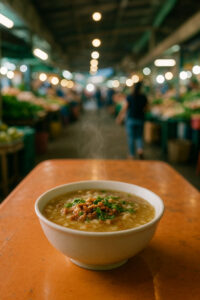
For something gentler, there’s lugaw – plain rice porridge – with add-ons like tokwa’t baboy or egg, usually around ₱30–₱60. Goto (tripe lugaw) and arroz caldo (gingery chicken rice porridge) are thicker and heartier, perfect on rainy days or in cooler cities like Baguio. You eat these on plastic stools at wobbly tables, wiping your spoon on a roll of tissue in the middle and adding calamansi, patis, or chili oil to taste. These classic plates are the backbone of Philippine market mornings everywhere.
Sweet bites and merienda-style mornings
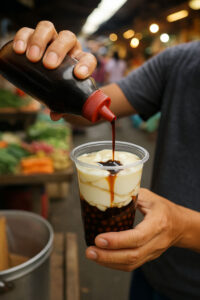 Not everyone wants rice at sunrise. Many people start their day with taho – warm, soft tofu with arnibal (brown sugar syrup) and sago pearls, served in a plastic cup. The vendor walks through the market or stands at an entrance, shouting “Tahooo!” and layering syrup and sago in a soft, practiced rhythm. A cup usually costs ₱20–₱40, and it’s one of the most comforting tastes of Filipino market mornings.
In stalls near the entrance or church-adjacent areas, you’ll find puto and kutsinta (steamed rice cakes), suman wrapped in banana leaves, bibingka cooked over coals, and kakanin trays in neon colors. In Visayas markets, painitan areas serve budbud, puto maya, and sikwate (hot chocolate) for breakfast. In many places, a simple combo of kakanin plus coffee costs under ₱100, making Philippine market mornings accessible even on a tight budget.
Market snacks and Filipino street food
As the clock approaches mid-morning, stalls selling Filipino street food start to warm up. You’ll see fish balls, squid balls, and kwek-kwek (deep-fried quail eggs in orange batter) bobbing in hot oil, ready to be dunked in thick sauces. Isaw (chicken or pork intestines), betamax (congealed blood), and other grilled skewers line small charcoal grills, smoke curling up into the rafters or tarpaulins.
Some of the best stories in Filipino food culture are told around these tiny stands. If you’re curious to dig deeper into how these snacks show up across cities, it’s worth checking out Filipino street food in Manila, Cebu, and Davao as a companion to this guide. In many hubs of Filipino market mornings, you can build a full “snack breakfast” for under ₱150: a skewer or two, some fish balls, a cup of sago’t gulaman, and maybe a turon or banana cue for dessert.
Characters and local voices
The taho or puto vendor weaving through the crowd
One of the most iconic characters of Philippine market mornings is the taho vendor, balancing two aluminum buckets connected by a wooden yoke. Even in busy public transport terminals outside the palengke, you’ll hear, “Tahooo, taho!” as they move through morning traffic. They become moving landmarks; you might tell a friend, “Kita tayo dito sa may taho.”
Sometimes the role is filled by a puto or kutsinta vendor instead, pushing a small cart or carrying a tray. A quick exchange – “Kuya, pa-isa nga, ’yung maraming arnibal” – and your morning is instantly sweeter. These vendors stitch together Filipino market mornings across regions; the accent changes, but the ritual stays.
The fishmonger at dawn
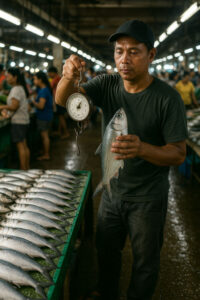
In the wet section, fishmongers are the rockstars of Philippine wet market mornings. They stand behind metal counters, arms splashed with water and scales, cleavers flashing as they slice and descale. A typical morning conversation goes: “Magkano po yung kilo ng galunggong?” “Para sa’yo, suki, gawin na nating otsenta.” If you’re new, they might gently tease your lack of tawad skills; if you’re suki, they’ll slip in a few extra pieces or adjust the price.
These vendors know which fish just arrived, which are best for sinigang, inihaw, or prito, and they’re usually happy to advise. In many markets in Luzon, Visayas, and Mindanao, fishmongers carry the latest tsismis too – so Philippine market mornings double as news exchanges.
The nanay, her bayong, and her suki
Watch closely and you’ll spot the queens of pamamalengke: nanays and lolas with sturdy bayong (woven bags), moving with full confidence through the maze. They know exactly which suki sells the freshest pechay, which one sneaks in lighter timbangan, and which meat stall gives the best buto-buto for nilaga. You’ll hear lines like, “Ay, kay Aling Nena na lang ako, mas malaki magbigay ’yun ng extra.”
These women know the market layout better than any map app. They carry mental price lists and seasonal calendars in their heads, adjusting their menu plans as they walk. Without them, Filipino market mornings wouldn’t have the same flow; they’re part quality control, part community glue.
The kid with the bayong and the office worker on the go
Then there are the quieter but equally important characters: the kid helping her parents carry a bayong twice her size, the teenage son dragging a sack of rice, or the college student picking up eggs and instant coffee for a boarding house. For them, the palengke is both errand and learning ground – a place to practice tawad, learn vegetable names, and observe how adults navigate community.
Meanwhile, the early-morning office worker or call center agent grabs a quick silog or lugaw before or after a shift. They might sit alone at a carinderia table, scrolling on their phone while a vendor asks, “Extra rice pa?” These small scenes play out daily in Filipino market mornings, reminding you that markets aren’t tourist attractions first – they’re living, working spaces for real people.
How to navigate Filipino market mornings (logistics, budget, comfort)
Best time to go and what changes by the hour
For the freshest experience, aim for 5 a.m. to 7 a.m. in bigger palengke and around 6 a.m. to 8 a.m. in smaller talipapa. At this hour, fish and seafood are newly delivered, vegetables are crisp, and breakfast stalls are just hitting their stride. By 9 a.m., crowds can thicken, especially on weekends or salary days, and some of the best cuts might already be gone.
Between 9 a.m. and 10 a.m., Philippine market mornings transition into late-morning mode: still busy, but more relaxed, with breakfast giving way to early lunch prep. If you’re sensitive to crowds or strong smells, this window may be more comfortable. After 11 a.m., some breakfast stalls pack up, and parts of the wet section might feel warmer and more pungent.
Budget, safety, and comfort tips
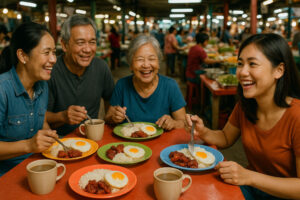 For a first-timer, a reasonable budget for pamamalengke-style breakfast and light shopping might be around ₱200–₱400 per person. That can cover a solid breakfast (₱80–₱150), a drink, a sweet snack, and some small pasalubong like kakanin or dried fish. If you’re doing full grocery shopping for a family, your budget will obviously go higher, but for exploring Filipino market mornings as a traveler or curious local, that range is a good start.
Wear comfortable, non-slip footwear – floors in the wet section are often slippery and always damp. Bring a small crossbody bag or sling worn in front, and keep valuables minimal. It’s generally safe in most public market Philippines hubs if you stay aware, but crowded spaces anywhere can attract pickpockets. Keep your phone secure, avoid flaunting large amounts of cash, and follow local advice.
For kids, older family members, or visitors not used to crowded or highly sensory spaces, consider going a bit later in the morning when the rush has eased, or stick to the drier, less slippery sections. Smaller neighborhood talipapa might be less overwhelming than giant city palengke. Take breaks at a carinderia table, hydrate often (Philippine market mornings can be hot and humid), and don’t be shy about stepping outside for air if the smell or noise gets intense.
Basic etiquette goes a long way: say “Po” and “Opo” to elders, don’t block narrow aisles, and be patient if vendors are multitasking. Ask before taking close-up photos of people, especially kids. Learn key Filipino words like “Magkano?” (How much?), “Pwede tumawad?” (Can I ask for a discount?), and “Salamat po” (Thank you). These small gestures make pamamalengke smoother and show respect for the people who make Filipino market mornings possible.
Changing markets: from traditional palengke to malls and weekend bazaars
Across the country, traditional palengke are changing. Supermarkets inside malls, weekend farmers’ markets, and trendy food bazaars have become part of modern Philippine market mornings, especially for younger, urban Filipinos. You might now buy your gulay in an air-conditioned aisle, your coffee from a specialty kiosk, and your silog from a food park stall playing OPM playlists.
Still, the heart of Filipino market mornings beats strongest in the palengke and talipapa. These are the places where suki relationships grow over years, where prices are still negotiable, and where you see the direct line between farmer, fisherfolk, and your plate. Newer markets and bazaars often borrow from palengke energy – the cluttered beauty, the direct vendor-customer connection – just with nicer lighting and curated stalls.
If you’re exploring Philippine market mornings for the first time, it can be fun to experience both: start in a traditional palengke at dawn, then wander through a weekend bazaar or mall-based market later in the day. You’ll see how Filipino food culture stretches from tiled wet floors and plastic stools all the way to sleek booths and reusable cup programs. For more context, you can dive into Filipino food culture stories and even browse more Filipino food culture reads to connect the dots between market life and the broader food scene.
Quick FAQs about Filipino market mornings
What is a palengke, and why is it busiest in the morning?
A palengke is a traditional public market where people buy fresh meat, seafood, vegetables, rice, and everyday essentials. It’s busiest in the morning because that’s when deliveries arrive from farms and ports, the weather is cooler, and families want fresh ingredients for breakfast and lunch. Vendors and suki rely on this early rush to set the tone – and the income – for the rest of the day.
How do Luzon, Visayas, and Mindanao markets feel different in the morning?
Luzon markets range from huge Metro Manila complexes to cool Baguio aisles and provincial hubs in Pampanga or Batangas, often mixing strong coffee, longganisa, and big-city hustle. Visayas markets lean coastal and kakanin-heavy, with seafood, puso, painitan stalls, and batchoy or inasal for breakfast. Mindanao markets showcase fruit abundance, coastal fish auctions, and halal, spice-heavy food corners. Together, these create a patchwork of Filipino market mornings that share the same warmth but sound, smell, and taste slightly different.
What should first-timers eat and how early should they arrive?
First-timers should try a silog plate, lugaw or arroz caldo, taho, and at least one kakanin or street food snack like turon or fish balls. Arrive around 6 a.m. to 8 a.m. for a balance of freshness and comfort. If you’re adventurous, go earlier in bigger city markets to catch the action, but if you’re crowd-shy, going closer to 8 a.m. or 9 a.m. in smaller markets might feel better.
How much should I budget for breakfast and a bit of shopping?
For a simple breakfast plus a few small buys, ₱200–₱400 per person is a good starting point. This can cover a hearty meal, a drink, and small treats or pasalubong like kakanin, dried mangoes, or a small pack of dried fish. If you’re stocking up on ingredients for multiple meals, expect to spend more, but many people still find palengke shopping cheaper than supermarket runs.
What Filipino words and etiquette tips help make pamamalengke smoother?
Learn “Magkano?” (How much?), “Pakibaba naman ang presyo” (Please lower the price a bit), “Pwede tumawad?” (Can I haggle?), and “Salamat po” (Thank you, respectfully). Smile, be patient, and remember that vendors are also working under heat and stress. Keep the aisles moving, don’t touch food with bare hands unless invited, and always be polite even when bargaining.
Is it safe and comfortable for kids, older relatives, or visitors unused to crowded spaces? Many families bring kids and older relatives to markets, but comfort depends on the specific place and time. For sensitive travelers, choose smaller palengke or neighborhood talipapa, go mid-morning to avoid the heaviest crush, and stay in drier, less slippery areas. Hold hands with young kids, watch your step in the wet section, and take breaks at carinderia tables. When choosing where to go, asking locals for recommendations on cleaner, more organized markets can help you find a gentle introduction to Filipino market mornings.
Wherever you start – under the cool roofs of Baguio, in the salty air of Cebu, in the fruit-scented streets of Davao, or in a small-town talipapa – the rhythm of Filipino market mornings will meet you with warmth. Come with an open stomach, a curious heart, and enough time to sit, sip kape, and listen to the stories unfolding between vendor and suki over a steaming bowl of breakfast.