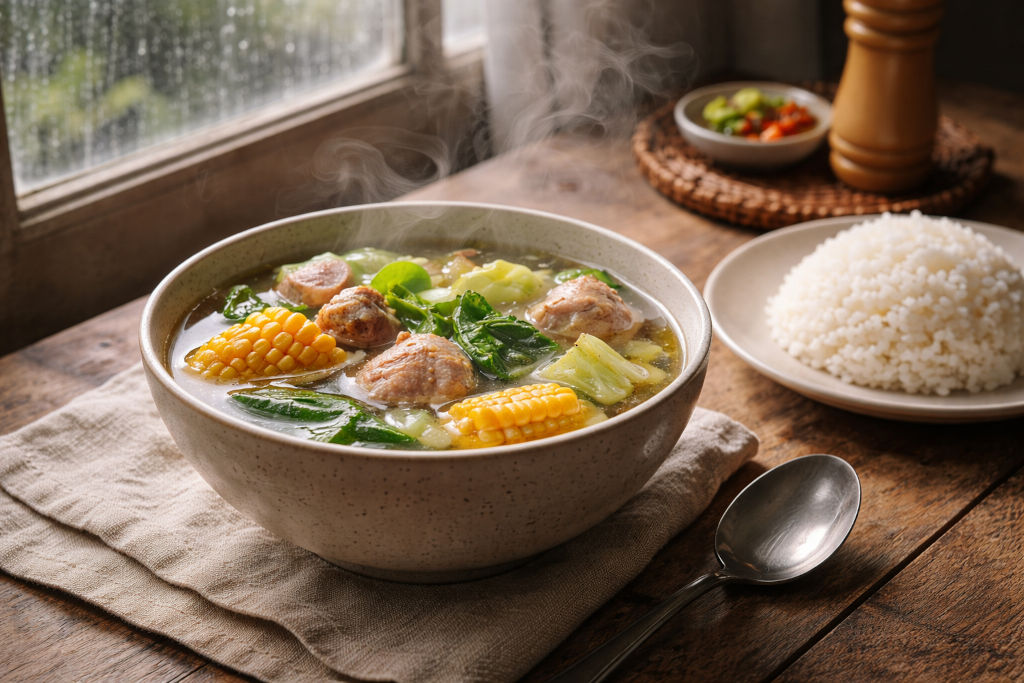
There’s a sound that feels like home: rain tapping the roof, a spoon knocking lightly against a bowl, and someone in the kitchen saying, “Kain na—may sabaw.”
Filipino comfort bowls aren’t just hot soup. They’re a kind of language we use when we don’t know what else to say. When you’re tired, when you’re sick, when you came home late and quiet. When the house feels too big because someone’s away. A bowl arrives—broth steaming, rice on the side, patis and calamansi within reach—and suddenly you feel taken care of without needing to explain why.
This isn’t a recipe article. It’s a walk through Filipino comfort bowls we reach for: rainy-day classics, noodle soups you eat standing by a carinderia counter, that Sunday pot that feeds everyone, and the gentler broths that feel like a reset. If you’ve ever finished a bowl and felt your chest loosen, you already know the point.
Why a Bowl of Sabaw Can Feel Like Being Loved
What makes a “comfort bowl” Filipino, beyond just being hot soup? It’s the way it comes with rituals: rice, sawsawan, and the quiet assumption that you’ll eat slowly. It’s the way Filipino comfort bowls belong to shared life—family kitchens, neighbors dropping by, someone saving you the best piece of chicken in tinola because they know you like it.
Comfort Bowls Are Not Solo Food
Even when you eat alone, Filipino comfort bowls feel communal. The pot is meant to be shared. You hear it in the language: “May natira pa?” “Dagdagan natin ’yan.” “Kuha ka pa ng sabaw.” It’s care expressed through abundance, but also through attention.
It’s Also About Weather, Always
We are a country of sudden rain and humid afternoons. Soup makes sense here—not as a winter thing, but as a body-regulation thing. A warm bowl helps you settle after being soaked, after a long commute, after an argument you don’t want to replay.
The First Sip Is the Point
With Filipino comfort bowls, the first sip is a small ceremony. You lean in. Steam hits your face. Your shoulders drop a little. It’s not dramatic, but it’s real.
The Filipino Comfort Bowls Formula (Rice, Broth, Sawsawan, and Small Rituals)
If you grew up Filipino, you probably know this without being taught: sabaw is not a side character. It’s a main feeling, and it’s one of the reasons Filipino comfort bowls land so deeply.
Why Sabaw With Rice Feels Like Care
Why does sabaw with rice feel like care in Filipino homes? Because it’s how we make a meal stretch and soften. Broth turns rice into comfort. It makes chewing easier when you’re tired. It warms you when you’re chilled. It feels like someone thought about your body, not just your appetite.
Sawsawan as a Personality Test
Patis with calamansi. Toyo with sili. A little suka on the side for certain soups. Sawsawan lets you customize your own comfort—especially in a shared pot where everyone’s palate is different. It’s also where “home taste” lives: your family’s patis brand, your lola’s preferred calamansi squeeze, the sili level that signals who you are.
Small Rituals That Make It Filipino
Putting a bowl of sabaw beside rice, not over it (unless you’re in a “halo-halo ng ulam” mood). Saving the best parts for someone else. Offering extra broth first, not last. These are tiny acts, but they add up to a culture of feeding.
Sour Comfort: Sinigang and the Magic of “Asim”
Why is sinigang so beloved? Because it’s the comfort bowl that wakes you up. It’s both soothing and sharp. It makes your mouth water and your body relax at the same time. Among Filipino comfort bowls, sinigang is the one that feels clean and alive.
What “Asim” Means to the Experience
“Asim” is sourness, yes—but in sinigang, asim is also brightness. It’s the flavor that cuts through heaviness. It’s the part that makes you take another spoonful even when you’re already full. Asim is a reminder that comfort doesn’t have to be bland.
Rainy Day Bowl Energy
Which Filipino soups are the go-to “rainy day” bowls? Sinigang is always on that list because it feels like a storm companion: you come home damp, you change into dry clothes, and the sour broth makes everything feel clear again.
Sinigang’s Many Personalities
Some families love it super asim; others prefer a gentler tang. Some want gabi-thickened broth; others like it clear. This variability is part of why it feels like home—your sinigang is never exactly the same as someone else’s, and that’s the point.
Where Sinigang Lives Outside Home
In carinderias, sinigang is often the dependable option—the one that tastes like “real lunch.” It’s also a dish you’ll see during gatherings and festivals, where soup helps feed many. If you like food traditions tied to celebrations, this is a good rabbit hole: Philippine festivals and food traditions.
Ginger Comfort: Tinola and the Quiet Kind of Healing
Why does tinola feel like a reset button after a long day? Because it’s gentle. It doesn’t shout. It clears the noise in your body the way a hot shower clears the noise in your mind. In the lineup of Filipino comfort bowls, tinola is the calm one.
Tinola’s Flavor: Clean, Warm, Slightly Sweet
Tinola is comfort through clarity: ginger heat, chicken sweetness, green papaya or sayote softness, malunggay or dahon ng sili that tastes like “something good for you” without being preachy.
The “Get Well Soon” Vibe (Without Being a Cure)
What’s the classic Filipino “get well soon” soup and why? For many families, tinola is the go-to bowl when someone’s under the weather because it’s light, warm, and easy to eat. No medical promises—just the kind of nourishment that feels supportive when you’re not at your best.
How Tinola Is Served Says Everything
Some people want extra ginger. Some want extra sabaw. Some want the chicken wing because it’s tender. Tinola is where family preferences become obvious in the most affectionate way.
Clear-Broth Comfort: Nilaga and Bulalo (Sunday Pot Energy)
Nilaga and bulalo are both clear-broth comforts, but their vibe is different—like two relatives at a reunion: one is quietly caring, the other is proudly indulgent. Both are classic Filipino comfort bowls when you want the pot to do the heavy lifting.
Nilaga vs Bulalo: What’s the Difference in Vibe and Flavor?
Nilaga feels like everyday care: mild broth, tender meat, cabbage and potatoes, sometimes saba bananas for that gentle sweetness. It’s the bowl you eat when you want calm.
Bulalo is richer and more “eventful,” often anchored by beef shank and marrow. It’s a weekend bowl, a road-trip bowl, a “we deserve this” bowl. The broth feels deeper, the mouthfeel heavier, the satisfaction louder.
The Rice Relationship
Nilaga and bulalo both beg for rice—not because you need it, but because it completes the feeling. Rice turns broth into a full-body comfort.
Best Mood for These Bowls
Nilaga: when you want peace. Bulalo: when you want comfort with celebration energy. Both: when you want the pot to feed everyone.
Lugaw Family Comfort: Lugaw, Arroz Caldo, Goto (Soft, Warm, Dependable)
If there’s a comfort bowl that doesn’t ask questions, it’s lugaw. It meets you where you are—whether you’re sick, tired, broke, or just craving softness. Filipino comfort bowls are often about emotion, and lugaw is pure reassurance.
What’s the Difference Between Lugaw, Arroz Caldo, and Goto?
Lugaw is the simplest: rice porridge, often plain, meant to be customized with toppings and sawsawan. It’s a base for comfort.
Arroz caldo is more flavored, usually with ginger and chicken, often topped with toasted garlic, scallions, and sometimes egg. It feels like lugaw’s more dressed-up cousin.
Goto typically leans heartier and meatier, often associated with tripe or beef components and a deeper savory profile. It’s the version you crave when you want something more “filling,” still soft but less delicate.
Rainy Night Lugaw Stalls and Late Commutes
Lugaw is also a street-side comfort: the kind you eat under a tarp while rain drips nearby, hot bowl in your hands, motorbikes passing. It’s warmth you can buy for a small moment of peace.
Toppings Are Part of the Story
Toasted garlic, calamansi, patis, chili oil, chicharon—these aren’t extras. They’re how we personalize comfort. Lugaw without toppings is a blank page; toppings make it your own.
Creamy Comfort: Sopas (The Rainy-Day Classic)
Sopas is the comfort bowl that feels like being tucked in. Creamy, slightly sweet, soft with macaroni and bits of chicken or hotdog—sopas is childhood in a pot for many of us. In the universe of Filipino comfort bowls, sopas is the softest blanket.
Why Sopas Hits Different When It’s Raining
Sopas is gentle richness. It’s not sharp like sinigang, not herbal like tinola. It’s comfort that leans into softness—perfect when the whole day feels gray.
The Home Kitchen Smell
There’s a particular smell when sopas is simmering—milk, butter, and steam—that instantly signals “someone is taking care of people today.”
When You’ll Find Sopas Outside Home
Often in small eateries, school canteens, and carinderias on rainy days when everyone wants something warm and familiar.
Noodle-Bowl Comfort: Batchoy, Pancit Molo, Mami and Lomi (Merienda That Hugs Back)
Filipino noodle soups are comfort bowls with momentum. They’re often eaten as merienda, late-night meals, or “quick but satisfying” pauses between errands. These Filipino comfort bowls feel like a hug with extra energy.
Batchoy: Garlicky, Porky, Proud
Batchoy is bold comfort—garlic, broth, noodles, toppings that make you feel like you’re getting your money’s worth. It’s the bowl you order when you’re hungry-hungry, not just peckish.
Pancit Molo: Delicate and Brothy
Pancit molo is a softer comfort—dumpling-like pieces in a warm broth that feels like it was made to be eaten slowly. It’s the kind of soup that makes you talk more quietly.
Mami and Lomi: Street-Side and Satisfying
Mami tends to be a straightforward noodle-broth comfort, often associated with quick meals. Lomi is thicker and heavier, a hug-bowl that can feel like a full meal on its own—especially when you want something filling after a long day out.
When People Eat Noodle Soup Comfort Bowls
After school. After work. During merienda. On rainy nights. In between travel legs. Noodle soups are the Filipino answer to “I want comfort but I also need energy.”
Underrated Comfort Bowls (Misua, Monggo With Malunggay, and Regional Soups)
 Not every comfort bowl gets a headline. Some are quiet favorites—the ones you don’t post online, but you remember when you’re tired. These are Filipino comfort bowls that live in ordinary days.
Misua: Soft Noodles, Gentle Broth
Misua feels like a whisper of a meal—light noodles, warm broth, often paired with meatballs or patola depending on the home. It’s what you eat when your stomach wants kindness.
Monggo With Malunggay: The Comfort Bowl That Feeds Many
Yes, monggo is often thought of as a ulam, but when it’s sabaw-heavy, it becomes a full comfort bowl. The texture is thick-soft, the flavor is earthy, and malunggay gives it that “this will help” feeling without forcing a narrative.
Regional Comfort Soups Worth Knowing (Without Being Encyclopedic)
The Philippines is a country of many bowls. If you want a broader list to explore (not as a checklist—more like a reference), you can peek here: List of Philippine dishes (Wikipedia). For a museum-rooted lens on food heritage, this page is a thoughtful anchor: Pagkaing Filipino (National Museum).
Carinderias, Family Kitchens, and Why Comfort Bowls Taste Different Outside Home
How do carinderias shape our relationship with soup and sabaw? Carinderias teach us that comfort is accessible. You don’t need a special occasion to deserve a warm bowl. You can be a student with coins in your pocket, a worker on a lunch break, a traveler who just wants something familiar—and the ladle still comes down with generosity. Filipino comfort bowls in carinderias can feel like care from strangers, and that is its own kind of warmth.
The Ladle Culture
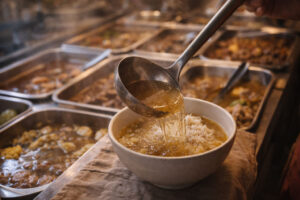 At home, someone asks if you want more sabaw. In a carinderia, the ladle often offers it before you ask. There’s a glow in that moment—broth pouring into a bowl, steam rising, the feeling that you’re being fed by a place that expects you to be human and hungry.
Why “Carinderia Tinola” Feels Different From “Bahay Tinola”
Home bowls carry memory. Carinderia bowls carry community. Both are comforts, but they land differently. A carinderia bowl can surprise you into feeling cared for by strangers—and that’s a very Filipino kind of warmth too.
Market Mornings and Sabaw Cravings
If you’ve ever eaten soup after walking through a wet market, you know the pleasure: your hands smell faintly of produce, your feet are tired, and then a hot bowl fixes everything. If you love that vibe, this guide captures the mood: Filipino market mornings travel guide.
How to Build Your Own Comfort Bowl Moment (Mood, Weather, Appetite)
You don’t need a perfect rainy day to deserve a comfort bowl. You can build the moment wherever you are—at home, in a small eatery, on a travel day when you miss your family a little. That’s the quiet power of Filipino comfort bowls.
Choose Your Bowl by Mood
When you want brightness: sinigang, for that asim wake-up.
When you want gentleness: tinola or misua, light but supportive.
When you want a big hug: bulalo, lomi, or a loaded batchoy.
When you want softness: lugaw or arroz caldo—dependable, quiet comfort.
Choose Your Bowl by Weather
Rainy and cold? Sopas or lugaw feels like a blanket. Humid and tired? Tinola can feel cleaner. Stormy and dramatic? Sinigang matches the mood perfectly.
Choose Your Bowl by Appetite
If you’re not that hungry, start with broth and rice. If you’re ravenous, choose noodle soups or bulalo energy. Filipino comfort bowls are flexible like that—they meet you where you are.
Carry the Story Into Travel
If you want to explore comfort bowls through travel, start with Food & Culture reads: Bakasyon.ph Food & Culture and Filipino food culture stories. For a coastal lens (because many soups taste different when you’re near the sea), this is a lovely companion: Filipino coastal cooking adventures.
FAQ + Closing: Remember Your Own Home Bowl
What makes a “comfort bowl” Filipino, beyond just being hot soup?
It’s the ritual: sabaw + rice, sawsawan on standby, and the culture of sharing from a common pot. It’s soup as care, not just soup as food.
Why does sabaw with rice feel like care in Filipino homes?
Because it stretches nourishment, softens the meal, warms the body, and feels like someone considered your comfort—especially when you’re tired or unwell.
Which Filipino soups are the go-to “rainy day” bowls?
Sinigang, sopas, lugaw/arroz caldo, tinola, and noodle soups like mami or batchoy—depending on whether you want sour brightness, creamy softness, or hearty warmth.
What’s the difference between lugaw, arroz caldo, and goto?
Lugaw is the simplest rice porridge base; arroz caldo is ginger-forward and often chicken-based with classic toppings; goto is usually heartier with a deeper savory profile and meat components.
Why is sinigang so beloved, and what does “asim” mean?
Sinigang is beloved because it’s soothing and bright at once. “Asim” is the sourness that wakes up your mouth and balances richness, making comfort feel clean and alive.
Why does tinola feel like a reset button after a long day?
Its clear ginger warmth and gentle broth feel restorative—easy to eat, easy to breathe through, supportive when you’re drained.
Nilaga vs bulalo: what’s the difference?
Nilaga is mild, everyday calm with vegetables in a clear broth. Bulalo is richer and more indulgent, often with marrow and a deeper beefy satisfaction.
What are Filipino noodle soup comfort bowls and when do people eat them?
Batchoy, pancit molo, mami, and lomi are noodle-bowl comforts often eaten as merienda, late-night meals, quick lunches, or rainy-day warm-ups.
What’s the classic Filipino “get well soon” soup and why?
For many families, tinola (and sometimes arroz caldo) is the classic—light, warm, easy to eat, and emotionally coded as care.
How do carinderias shape our relationship with soup and sabaw?
They make comfort accessible and communal. The ladle, the steaming counter, the familiar choices—carinderias teach us that a warm bowl can be part of everyday life.
What are underrated regional comfort soups worth knowing?
Misua and sabaw-heavy monggo with malunggay are gentle favorites, plus many regional broths that vary by province and family—worth exploring slowly, without turning it into a checklist.
Maybe your home bowl is sinigang with extra gabi, or tinola with more ginger than anyone else wants, or lugaw from the corner stall that knows your order without asking. Whatever it is, it’s not “just soup.” Filipino comfort bowls are small proof that care can be as simple as a pot on the stove and someone saying, “Dagdagan pa kita ng sabaw.”