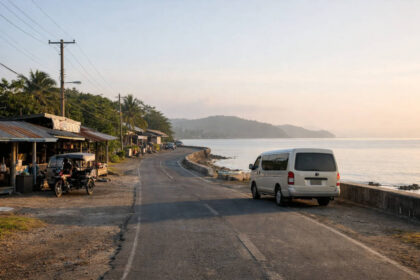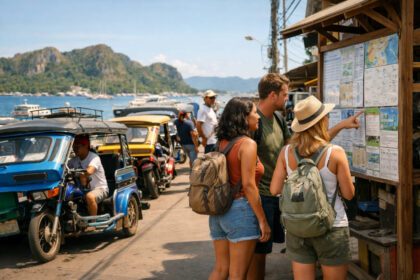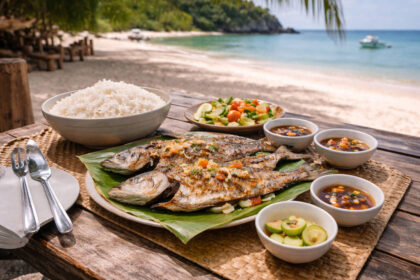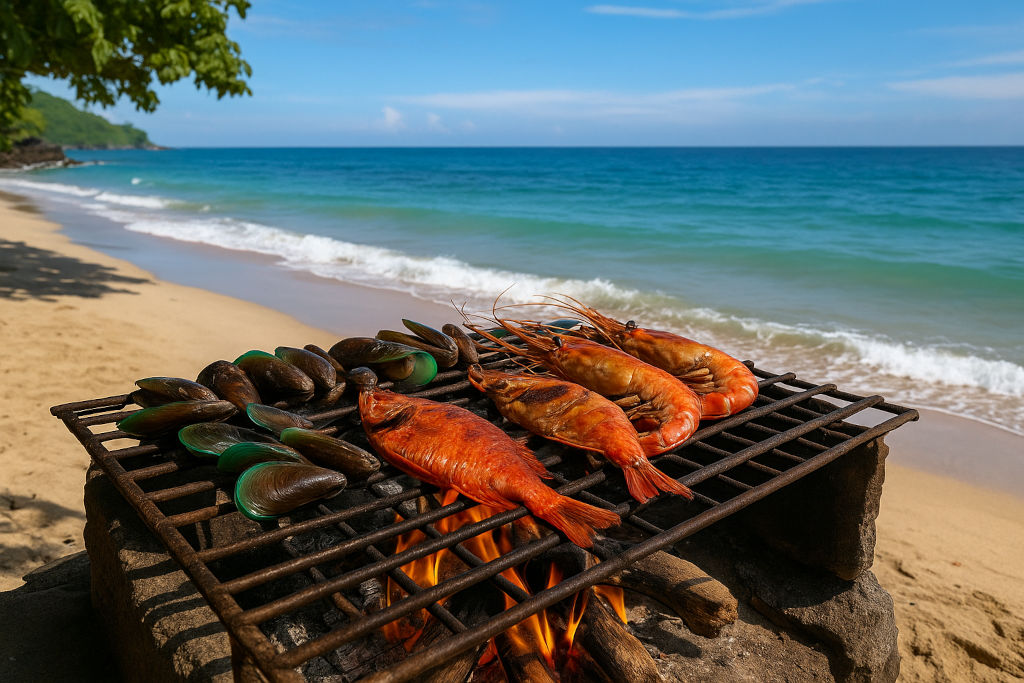
I still remember my first taste of Filipino coastal cooking on a sunlit morning in Zambales—the air thick with salt, the sand warm under my feet, and a charred, citrusy aroma drifting from a small grill by the shore. Moments like this made me fall in love with Filipino coastal cooking, a tradition shaped by tides, stories, and families who have spent generations living by the water. Every island brings its own rhythm, and each bite felt like learning anew what it means to cook filipino dishes in a place blessed by the sea.
Adventures Across Islands and Kitchens
As I traveled deeper into the archipelago, I found that coastal cooking in the Philippines wasn’t just about fresh catch—it was about the people who know the water by heart. In Zambales, grilled fish shimmered with calamansi glaze, reminding me why Filipino coastal cooking thrives where simplicity meets instinct. A local fisherman told me that every grill tells a story, and I realized how Filipino coastal cooking lets ingredients speak for themselves in ways only an island nation and infinite variations can deliver.
By the time I reached Siargao, the waves were rolling in as locals prepared kinilaw by the beach. Filipino coastal cooking shines brightly here, with fresh tuna cut into cubes and bathed in vinegar and tabon-tabon. Many travelers ask, “Are ceviche and kinilaw the same?”—and the short answer is no. Kinilaw celebrates native citrus, coconut vinegar, and island-specific ingredients that ground it firmly in Filipino coastal cooking traditions.
Cebu welcomed me with sutukil—sugba, tula, kilaw—three ocean-loving expressions of Filipino coastal cooking. Watching cooks prepare the trio felt like seeing how a classic dish captures the essence of a community. Sutukil shows how Filipino coastal cooking adapts beautifully to local tastes while honoring the rhythm of daily catch.
Davao’s Tuna Heritage and Coastal Wisdom
In Davao, the abundant tuna shapes Filipino coastal cooking into a celebration of texture and flavor—from charred panga to spicy kinilaw malasugi. Here, someone told me that ocean this classic dish captures both livelihood and love, and I felt how Filipino coastal cooking becomes a living connection to heritage. It also made me think of the common debate: “What is the top 1 Filipino dish?” Many answer adobo, but in the coastal mindset, the best dish is whatever was caught that morning.
With my notebook filled with stories, I found myself asking locals another question often heard at beach gatherings: “What Filipino food to bring to the beach?” Most agree that Filipino coastal cooking favorites like inihaw na liempo, ensalada, or fresh seafood are ideal, because they travel well and bring the comfort of home. Every island has its rituals, and Filipino coastal cooking keeps those rituals alive.
One grandmother in Davao proudly told me about culinary icons, sparking another question: “Who is the mother of Filipino cooking?” Many point to Teresita “Mama Sita” Reyes, whose influence reached countless kitchens. Her legacy continues to inspire traditions like Filipino coastal cooking, reminding us how history and home flavors intertwine.
In every destination, Filipino coastal cooking felt like an invitation to slow down, savor the breeze, and embrace community. I found myself slipping into small conversations about family recipes or trading notes with cooks who believe Filipino coastal cooking is best when shared, never rushed. Those little exchanges capture the heart of travel—curiosity, kindness, and the joy of discovering flavors that shape who we are.
Along the way, I revisited travel resources to understand these foodways more deeply, from stories of tuna towns to guides on the best seaside eats. I browsed cultural notes from the Department of Tourism’s heritage discussions on coastal communities through their overview of Philippine cuisine, finding connections that enriched my journey. I also read through vibrant travel features on Bohol’s coastal food trails, explored seafood inspirations from Palawan adventures, and discovered island flavors described in Siargao itineraries—each echoing the heartbeat of Filipino coastal cooking.
As my journey ended, I realized that coastal cooking in The Philippines is more than a cuisine—it is a cultural tapestry woven by wind, salt, and community. And in every island, someone is grilling, marinating, stirring, or sharing, ensuring Filipino coastal cooking thrives across generations. May these flavors inspire you to seek stories, honor heritage, and taste your way through the Philippines, one shoreline at a time.