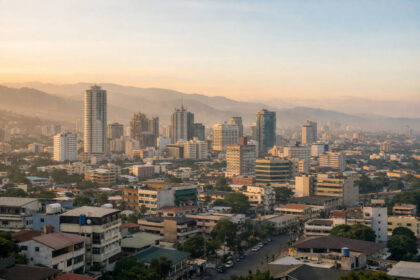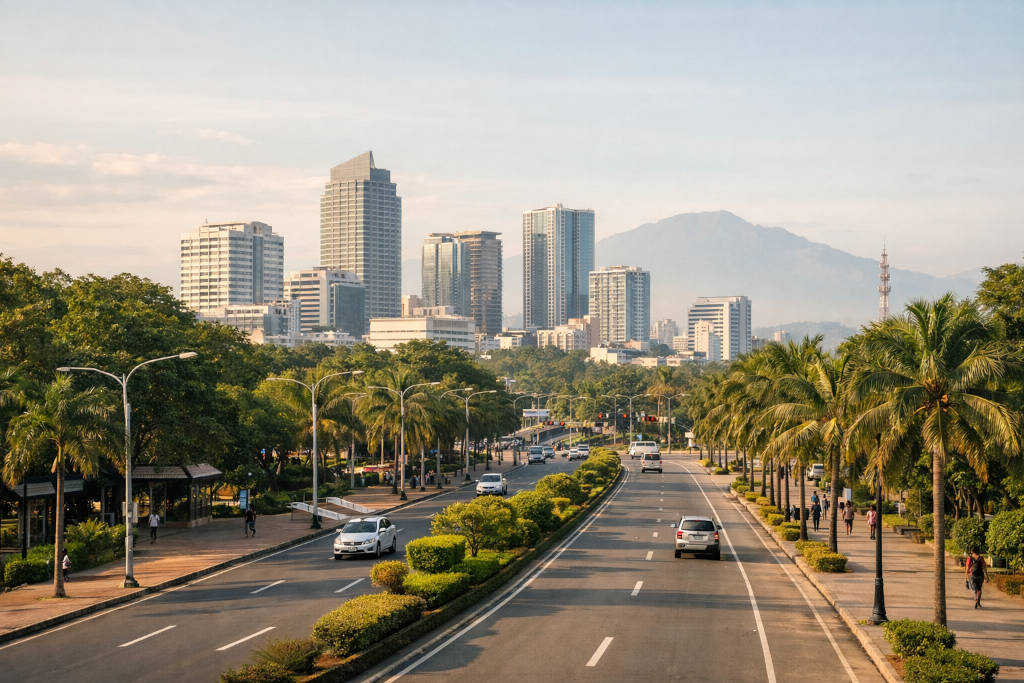
If you want a Philippine city break that feels more manageable than Metro Manila, with food, nature, and practical day trips all within reach, this davao city travel guide is built to help you plan with less friction.
Davao City works best as a calm base rather than a checklist destination. The city itself gives you malls, parks, markets, and easy local meals, while nearby nature spots like the Philippine Eagle Center, Malagos, and Eden Nature Park can fill out the trip without forcing a high-energy pace. The key is not trying to do everything in one sweep.
This version is deliberately planning-first. Instead of repeating the broad destination feel already covered in this broader Davao guide, the goal here is to help you decide where to stay, how many days to give the city, when Samal Island is worth adding, and where spending a bit more will actually make the trip easier.
Think of this as the low-stress companion to a first visit, especially if you prefer smooth transfers, realistic timing, and room for weather or energy dips.
Quick Decision Summary: Who This Davao City Travel Guide Suits Best
Best for travelers who want an easy city base with nature and food nearby
This davao city travel guide suits travelers who like the idea of sleeping in one city base and choosing day trips depending on mood, weather, or budget. Davao City is especially good for first-timers to Mindanao, couples who want a quieter urban break, families who prefer bigger rooms and mall access, and solo travelers who like having Grab, taxis, and familiar conveniences nearby.
It also works well for food-led trips where local fruit, grilled seafood, and casual evening stops matter as much as classic sightseeing.
One of Davao City’s biggest strengths is range without too much drama. You can spend one day in a shaded park, another in a museum or market area, and another on a nature outing without changing hotels every night. Reality Check: the city is large, and “nearby” does not always mean quick during busy hours. The trip feels easiest when you choose one base and avoid bouncing across too many districts in a day.
Less ideal for travelers expecting walkable beach days inside the city itself
Davao City is not the best match for travelers who want a beach right outside the hotel or a highly walkable heritage center where every major stop is ten minutes apart. The beach mood usually means going to Samal Island, and that adds ferry timing, port movement, and a little extra decision-making. If your dream trip is mostly sand, swimming, and shoreline lounging, a split stay or a Samal-focused plan may feel better than treating the city as a beach destination.
It is also less ideal for travelers who want a nightlife-heavy scene or a dense concentration of old-city landmarks. Davao City feels more spacious, spread out, and practical than theatrical. That is part of its charm, but it helps to arrive with the right expectations.
Davao City at a Glance
What makes the trip feel easy
The best thing about a calm first visit is that the essentials line up well. Francisco Bangoy International Airport is close enough for a relatively straightforward arrival. Hotels range from budget-practical to polished comfort. Food is easy to access in malls, local restaurants, fruit stalls, and night-market settings.
Day trips can be selected by energy level: People’s Park and Roxas Night Market for something lighter, the Philippine Eagle Center and Malagos for a nature-focused day, or Samal Island when you want a water break.
For wider route planning around Mindanao and nearby hubs, it also helps to keep the Philippines first-trip planning guide in mind before locking your pacing. Davao City rewards travelers who leave breathing room between airport movement, hotel check-in, and the first real activity.
What can still slow a trip down
The friction points are usually ordinary rather than dramatic: heat, traffic, the city’s wide layout, and the temptation to group airport arrival, urban stops, upland attractions, and Samal into one overpacked itinerary.
Ferry transitions to Samal are not difficult, but they are still transitions. Upland drives are scenic, but they take time. Even simple evening plans can feel tiring after a humid afternoon.
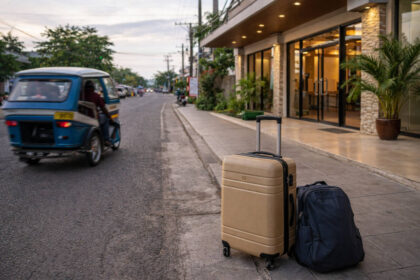
Reality Check: Davao City becomes much more enjoyable when you respect transfer time. A plan that looks efficient on a map can still feel rushed on the ground, especially if you are carrying luggage, traveling with kids, or arriving around meal times or rain showers.
Best Time to Go and How Many Days to Give It
Weather, heat, and crowd reality
Davao City can be visited year-round, but comfort depends a lot on heat tolerance and how much outdoor time you expect. Mornings are usually your friend for city walks, parks, and market stops.
Afternoons can feel sticky, and even short outdoor transfers can drain energy quickly. Rain can also rearrange a day, especially if you were counting on island time, a nature stop, or a scenic upland outing.
For a broader seasonal sense, the Philippines weather planning guide is worth reading before finalizing dates. Reality Check: there is no magic month that removes all heat or weather interruptions. The real win is choosing a trip length with enough buffer so one hot or rainy half-day does not break the whole plan.
When 3D2N is enough and when 5D4N is better
A calm 3D2N trip is enough if your goal is to sample Davao City as a base, enjoy one city-focused day, and choose either a nature outing or a Samal add-on. That works best for travelers arriving on a decent flight time, staying in a practical district, and keeping expectations narrow. A short trip can still feel satisfying when the itinerary is built around two anchor experiences, not five.
Choose 5D4N if you want Davao City to breathe a little more. This longer pacing is better for first-timers, families, slower travelers, mixed-energy groups, and anyone curious about combining city food stops, one upland or wildlife day, and either a Samal day trip or an overnight split stay. In this davao city travel guide, the safest planning principle is simple: when in doubt, add one more night instead of one more stop.
Davao City Travel Guide: Where to Stay
Central base for first-timers
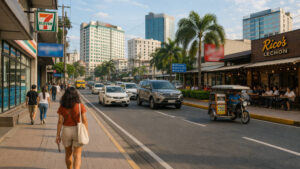 If this is your first trip and you want an easy default, look at central areas around the Poblacion District, Bajada, or places with straightforward access to major roads, malls, and dining. A central base usually makes airport transfer, food runs, and evening plans easier. It also gives you flexibility if weather changes and you need to swap a bigger outing for something lighter like a park, mall, café, or market.
This is the best option for travelers who want balanced convenience over perfect quiet. Reality Check: central does not always mean scenic, and some roads can feel busy rather than charming. But for first-timers trying to minimize decision fatigue, central often wins.
Quieter comfort-focused base
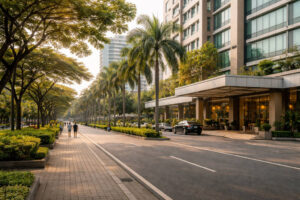 If you care more about a calmer hotel environment, bigger modern properties, and less inner-city friction, Lanang is usually the most attractive comfort-first base. It tends to feel more polished and easier for travelers who prioritize room quality, breakfast comfort, and lower-noise evenings over being near every budget eatery. This can be especially appealing for couples, work-and-leisure travelers, or anyone arriving tired and wanting a smoother first night.
Spending more here often improves the trip in tangible ways: less arrival stress, better rest, more reliable amenities, and an easier recovery day if the weather turns. The tradeoff is that you may rely more on rides rather than casual walking between stops.
Budget-practical base
Budget travelers usually do best in practical zones where transport, food, and simple accommodations overlap well rather than in the absolute cheapest corner they can find. Parts of Matina and Ecoland can work for this, especially if your priority is lower room cost and access to transport corridors. Choose places with strong recent reviews for cleanliness, noise control, and ease of pick-up, not just low rates.
Budget is still workable in Davao City, but the wrong budget choice can create small daily annoyances that add up. Reality Check: saving a little on the room is not worth it if you lose time on every ride, arrive hungry to a thin food area, or spend nights dealing with noise and weak sleep.
When to stay in the city only and when to add Samal
Staying in Davao City only is usually the smarter first-trip move if you have just 3D2N, if you dislike packing and repacking, or if beach time is only one part of the plan. A city-only base keeps logistics simple and lets Samal remain optional. That means you can decide based on weather, energy, and current mood instead of feeling locked into a transfer.
Add a Samal overnight when beach time is one of your top two goals, when you have at least 5D4N, or when your group values resort downtime more than city food-hopping. This guide treats Samal as a bonus, not the center of gravity. For many first-timers, a day trip is enough to get the water-and-island feeling without turning the whole trip into luggage logistics.
What to Do by Travel Style
Beach and easy island add-ons
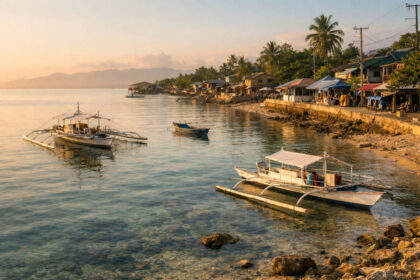
 If your group wants a beach break without rebuilding the trip around it, Samal Island is the easiest add-on. It works best as a day trip from the city when the forecast looks decent and you want a gentler change of scene. Keep the goal simple: resort day use, lunch by the water, or one swim-focused stop. Trying to squeeze multiple beach venues into one day often adds more transit than pleasure.
Reality Check: the smoothness of a Samal day depends a lot on ferry flow, road transfers on the island, and the time you leave. An early start and a realistic return time matter more than ambition.
Nature and wildlife
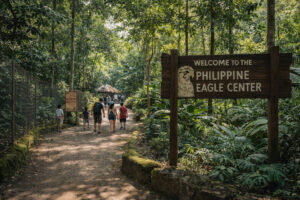 Davao City shines for travelers who want nature without a hardcore adventure setup. The Philippine Eagle Foundation is one of the most meaningful stops for visitors interested in conservation, and it pairs well with nearby upland plans if you do not crowd the day.
Malagos can add a softer, family-friendly rhythm with green surroundings and food stops, while Eden Nature Park suits travelers who enjoy cooler-feeling upland scenery and a slower open-air day.
This is where Davao can feel especially rewarding: you get a city hotel base, but your day can still include trees, shaded walks, and fresh-air breaks. Just remember that upland routes take longer than they look.
Culture and city texture
For city texture, think in layers rather than blockbuster landmarks. People’s Park is an easy low-effort stop, especially in the late afternoon. Local museums, fruit stalls, and market areas can give a stronger sense of place than racing between too many formal sights.
The official Davao City tourism guide and tourist map can help you visualize how to cluster urban stops without doubling back.
If you want broader food-and-neighborhood inspiration around the country, the Davao food context guide adds helpful perspective. Reality Check: Davao City’s appeal is often cumulative. It may not overwhelm you with one single old-town centerpiece, but it can feel satisfying when you combine park time, local food, and one or two meaningful side trips.
Food and low-effort evening stops
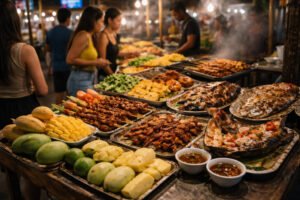 Food is one of the easiest reasons to like Davao City. The low-effort move is to keep evenings simple: a good seafood or grilled dinner, fruit or dessert, then a walkable or short-ride stop like Roxas Night Market if your energy still holds. Tuna dishes, pomelo, durian for the curious, and other fruit-forward snacks can shape the memory of the trip as much as any formal attraction.
Roxas Night Market is useful because it is casual, atmospheric, and easy to understand even on a short visit. Still, go with realistic expectations. It is more about the evening mood and accessible local eating than some grand must-see spectacle.
Sample 3D2N Itinerary With Buffer Time
Version for low-energy first-timers
Day 1: Arrive at Francisco Bangoy International Airport, take a taxi or Grab to your hotel, and keep the first half-day light. After check-in and a meal, choose one easy stop only, such as People’s Park or a mall-based dinner. If you still have energy, end with Roxas Night Market. The real goal is to land softly, not to prove anything on arrival day.
Day 2: Make this your anchor day. Choose a nature-and-wildlife outing such as the Philippine Eagle Center with Malagos, or choose an upland day with Eden Nature Park if your group prefers open-air scenery. Leave the evening mostly free. That buffer matters because weather, traffic, or fatigue often appear here.
Day 3: Keep departure day short and local. Have breakfast, buy fruit or small pasalubong if needed, and head to the airport with more allowance than you think you need. Reality Check: a 3D2N plan only feels calm when Day 1 and Day 3 stay intentionally light.
Version with a Samal add-on
Day 1: Same gentle arrival plan. Check in, eat, and save your energy.
Day 2: Take your Samal day trip early. Aim for one main beach or resort experience and lunch, then return to Davao City before the day feels stretched. Keep the evening flexible for dinner near your hotel. Day 3 becomes your light city window, which can include People’s Park, a quick museum, café time, or market snacks before departure.
This version works only if the flight times are kind and your group moves efficiently. If not, skip Samal and keep the city base simple.
Sample 5D4N Itinerary With Buffer Time
Slower pacing with rest windows
Day 1: Arrival, hotel check-in, easy dinner, early night.
Day 2: Central city day with People’s Park, one cultural stop, and a relaxed dinner. Do not force a full sightseeing arc yet.
Day 3: Nature day for the Philippine Eagle Center and Malagos, or an upland day built around Eden Nature Park. Return with enough time to rest before dinner.
Day 4: Samal Island day trip or overnight shift if beach time matters a lot to your group. If not, use this as a flexible food-and-recovery day with mall comfort, coffee, and a short evening outing.
Day 5: Departure with room for airport movement, breakfast, and final shopping.
This version gives Davao City its best chance to feel calm. There is enough space for one lower-energy morning, one weather adjustment, and one spontaneous food stop that does not wreck the plan.
Rain or fatigue backups
Every longer trip should include backup logic. If rain cancels Samal, swap in a mall-based meal crawl, museum time, a café afternoon, or a gentler urban loop. If the group is tired after an upland day, move the evening market plan to the next day instead of dragging everyone through it.
The quiet skill in a good davao city travel guide is not filling every hour. It is knowing what can be dropped without losing the spirit of the trip.
Getting There and Getting Around
Airport arrival and city transfer logic
Francisco Bangoy International Airport usually makes a first arrival feel more straightforward than arrivals in larger, denser Philippine gateways. For most travelers, the least stressful move is a taxi or Grab directly to the hotel. If you arrive late, with kids, or with several bags, this is one of the clearest places to choose convenience over squeezing every peso.
Plan your first meal before you land mentally. A simple dinner near the hotel often beats trying to chase a famous stop across town on arrival night. Reality Check: the airport may be near the city compared with other destinations, but arrival still takes energy, and Davao’s broad layout means the “last mile” to your hotel matters.
Taxi, Grab, jeepney, and when not to force public transport
Davao City is manageable without a car for most first-timers, especially if you rely on taxis and Grab for the main bones of the trip. Jeepneys are part of local life and can be useful for experienced travelers comfortable with route uncertainty and heat, but they are not always the best choice when you are hauling bags, trying to save time, or heading to out-of-the-way attractions.
Read the Philippines public transport basics if you want context, but do not feel pressured to prove something through transport choices. Paying for easier point-to-point movement is often the difference between a trip that feels smooth and one that feels chipped away by small irritations.
Day trip and ferry friction to plan around
The main planning trap is stacking too many transitions into one day: hotel to port, ferry to Samal, resort transfer, return ferry, then a city dinner far from your hotel. Each segment may be manageable on its own, but together they can turn a supposedly easy day into a tired one. The same goes for combining upland attractions with an evening market after a very warm afternoon.
The low-stress rule is to build days around one main movement pattern. City day, island day, or upland day. Mixing all three rarely improves the trip.
Budget vs Comfort Tradeoffs
Where paying more saves time or stress
In Davao City, paying more often helps most in four places: a better-located hotel, a quieter room, a direct airport transfer, and a more comfortable base for recovery afternoons. These upgrades matter because the city’s pace is not about squeezing into famous queues. It is about keeping your energy steady enough to enjoy what you already planned.
Another worthwhile comfort upgrade is choosing a hotel breakfast or nearby dining cluster that removes the daily question of where to start. Small routine friction can make a short trip feel busier than it is.
Where budget choices still work fine
Budget choices work well for simple local meals, modest city attractions, and shorter evening stops. You do not need luxury dining to enjoy Davao’s food character, and many satisfying moments here are inexpensive: fruit, grilled dishes, a market snack, a park visit, or a low-key café reset. This safety planning context is also useful when choosing where to save and where to stay cautious.
Reality Check: budget works best when it is selective, not absolute. Save on things that do not reduce comfort much, and spend on the points where fatigue and confusion usually enter the day.
Common Pitfalls and Safety Notes
Overpacking one day with city plus Samal plus upland stops
The most common mistake is building an itinerary that tries to “maximize” every day and ends up flattening the trip. Davao City, Samal, and upland attractions each deserve their own rhythm. Combining them too aggressively can mean more waiting, more transfers, more heat exposure, and less actual enjoyment.
Another pitfall is choosing a hotel only by price without checking whether the area supports your actual plan. A cheap room far from your evening food stops or next-day route can cost you more in rides and energy than it saves.
Heat, rain, dark-hour timing, and basic safety habits
Start earlier than you think for outdoor stops, especially if your group is sensitive to heat. Carry water, expect slower walking in humid weather, and leave rainy-day substitutes in your notes before the trip begins. For evenings, keep your route home simple and avoid turning every dinner into a long cross-city journey.
Davao City is easiest to enjoy when you use ordinary good travel habits: stay aware of your belongings, use established transport options, double-check late-hour plans, and avoid overconfidence just because the city feels more manageable than larger hubs. Calm planning is part of safety, too.
Final Low-Stress Planning Tips
Simple booking priorities
Book the flight times that reduce pressure, not just the cheapest fare. Prioritize a hotel in the stay zone that matches your real style: central for flexibility, Lanang for quieter comfort, or a practical Matina or Ecoland base for budget-conscious planning. Keep your first day and last day deliberately lighter than the middle of the trip. That single choice improves a Davao itinerary more than most travelers expect.
Before you go, save the stay-area logic, transport notes, and weather backup ideas from this davao city travel guide. The point is not to control every hour. It is to remove the most common sources of friction.
What to leave flexible
Leave Samal flexible if possible. Leave one dinner open for whatever food mood wins. Leave one half-day loose for weather, rest, laundry, café time, or an extra market stop. Davao City rewards that kind of calm, breathable planning. It may not be the Philippines’ flashiest urban break, but for travelers who want a grounded base with nature, food, and fewer hard edges, it can be a very good fit.
That is the real takeaway of this davao city travel guide: use Davao City as your anchor, choose only a few strong priorities, and let comfort, timing, and energy shape the rest. The trip usually feels best not when it is packed, but when it has enough room to stay pleasant.