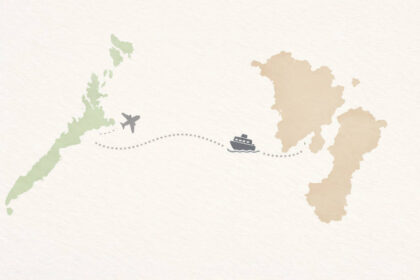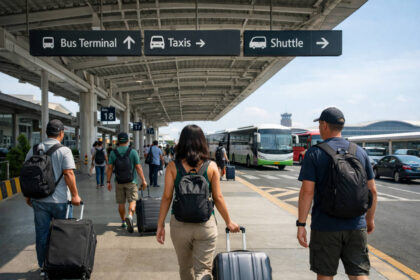
The least-stress way to plan Davao City to La Union is usually this: fly from Davao to Clark, then continue by road to La Union with a prearranged pickup, bus, or another simple land transfer. That route keeps the Luzon road leg shorter than Manila and usually feels cleaner for travelers who want fewer moving parts. The other practical option is Davao to Manila, then a Manila to La Union bus or private transfer. That can work well too, especially when flight choices are better into the capital, but it usually comes with more terminal transfer friction and a longer road journey.
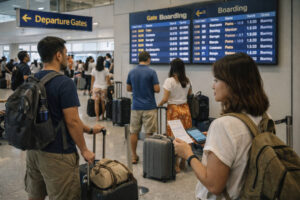 One thing is important to set early: in normal trip planning, travelers do not usually see a direct commercial flight from Davao City to La Union in live route searches. La Union is not the air arrival point here, so the real trip is a connecting journey by air and land. If you are still shaping the rest of your Northern Luzon stay, these La Union travel ideas and more practical travel tips and inspiration can help you build a smoother first day.
At-a-Glance
Best time window for a same-day move is a morning or early-afternoon flight that lands with enough daylight left for the road leg. A realistic travel flow is DVO to CRK for a shorter Clark to La Union transfer, or DVO to MNL if flight timing, airline choice, or fare availability is better. Budget-wise, think in bands rather than fixed prices: airfare changes fast, baggage can add a noticeable amount, and airport-to-bus or airport-to-hotel transfers can quietly raise the total.
For comfort, expect the whole trip to take most of a day even when the flight itself looks short. Crowd and traffic risk is usually lower through Clark than through Manila, but road delays can still happen anywhere. Your rain or heat backup is simple: add a buffer night near the airport, then continue fresh the next morning instead of forcing a late transfer.
Reality Check: This is not a quick hop. The low-stress version is not the fastest-looking booking screen; it is the plan with enough breathing room for baggage claim, terminal movement, and a delay backup plan.
Best Option for Most Travelers
Davao To Clark Then La Union: The Cleanest Handoff
For many Philippine readers, DVO to CRK is the cleanest version of this trip. Clark is closer to La Union than Manila for the onward land leg, so the total ground time is easier on energy, especially if you are carrying bags, traveling with family, or trying to arrive without feeling wrung out. If you can match your flight arrival with a straightforward bus, van, or private pickup, Clark often wins on comfort.
Another advantage is mental load. You land, collect bags, sort your ride, and head north. You are not dealing with the same level of big-city airport congestion or the longer road stretch that usually comes after landing in Metro Manila. This is why DVO to CRK plus land transfer deserves to be the default recommendation for low-stress planning.
Davao To Manila Then La Union: The Flexible Backup
DVO to MNL is the flexible alternative. Manila often gives travelers more flight choices, more sale opportunities, and more fallback options if one schedule does not fit. That matters if you are booking late, traveling on a specific day, or trying to line up a certain work or family schedule.
The trade-off is friction. NAIA can be tiring, and the Manila to La Union bus or private transfer adds a longer road segment. This route still makes sense when the fare gap is large, when Clark timings are poor, or when you would rather spend a night near Manila and continue the next day. For travelers who prioritize flight availability over a shorter land leg, Manila stays very usable.
Is There a Direct Flight From Davao City to La Union?
In practical trip planning, no. Travelers searching routes should treat this as a fly-then-land trip, not a direct point-to-point flight. Even if people casually describe it as a connecting flight journey, the connection is usually between your flight and your bus, van, or car to La Union rather than a direct arrival into La Union itself.
For a useful route comparison mindset, it also helps to look at how other inter-island trips work. This related read on Bacolod to La Union options time cost tips shows the same planning logic: simple air access first, then a realistic land leg afterward.
Reality Check: The lowest airfare is not always the easiest trip. A slightly higher fare into Clark can still be the better value if it removes hours of road time and transfer stress.
Clark or Manila: Which Connection Makes More Sense?
When Clark Is the Better Choice
 Choose Clark when your main goal is a smoother arrival. Clark is often the better choice if you are traveling with seniors, kids, surfboards or bulky luggage, or if you simply want a shorter onward drive. It is also a strong choice if your accommodation is in San Fernando, San Juan, or another La Union stop where arriving before dark matters to you.
Clark also becomes the better call when you can arrange the road leg before you fly. A prebooked pickup, trusted driver, or clearly timed bus turns this into a manageable one-day plan. If you want a preview of general airport transfer patterns there, the Clark airport transportation guide is useful for thinking through ground options after landing.
When Manila Is the Safer Choice
Choose Manila when flight availability matters more than route elegance. DVO to MNL can be the safer choice if Clark fares are unusually high, if the Clark schedule lands too late for a comfortable road transfer, or if you want the security of more rebooking choices in case of airline disruption. Manila can also work well if you are meeting relatives, sharing a private van, or planning a buffer night anyway.
The warning is straightforward: NAIA friction is real. Extra walking, waiting, traffic, and terminal transfer timing can stretch the day more than first-time planners expect. If you land tired or late, the smart move is often to sleep near the airport and take the bus or private ride north the next morning.
Private Car Versus Bus After Landing
For Clark to La Union, a private car or arranged van usually gives the easiest handoff, especially for small groups splitting the cost. A bus can be cheaper, but it works best when your arrival timing lines up cleanly and you are comfortable with a bit more waiting. For Manila to La Union, the bus is usually the value option, while a private transfer makes sense for late arrivals, heavy bags, or families who want fewer changes.
Reality Check: The “best” connection is often the one that protects your energy. A bus may save money, but after a full airport day, many travelers feel the extra waiting more than they expected.
Realistic Davao City to La Union Door-to-Door Time
DVO To CRK: What the Day Usually Feels Like
A realistic door-to-door travel time through Clark usually starts with arriving at Davao Airport around two hours before departure. Add the flight itself, then deplaning and baggage claim, which can easily take another 30 to 60 minutes if checked baggage is involved. After that comes your airport exit, pickup coordination, or transfer to the next bus or van.
From Clark, the road leg to La Union is shorter than from Manila but still significant. Depending on traffic, exact destination in La Union, and whether you are going straight by private car or waiting for public transport, many travelers should think in the range of roughly 8 to 11 hours total from leaving home in Davao City to reaching their La Union stay. A very smooth day can be shorter; a crowded or weather-affected day can be longer.
DVO To MNL: Why the Whole Day Runs Longer
DVO to MNL can look similar in the air, but the total day often stretches because Metro Manila adds more friction before the northbound road leg even begins. You still need airport lead time in Davao, then the flight, then deplaning and baggage claim. After that, you may deal with terminal transfer issues, traffic leaving the airport area, and a longer Manila to La Union bus or private transfer.
For most planners, a realistic same-day total through Manila is often around 10 to 15 hours door to door, and it can run beyond that if you hit rush-hour traffic, miss your intended bus, or land behind schedule. This is why the route can be flexible on paper but more tiring in practice.
How Much Buffer Should You Build In?
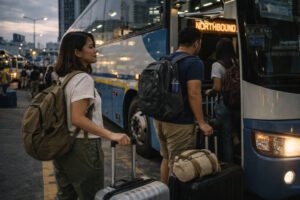 A good planning rule is to build at least a modest cushion between landing and your next transport step. If you are taking a bus, avoid a razor-thin handoff. If you are arranging a car, make sure the pickup plan has room for a delayed touchdown or slow baggage belt. If you are traveling on separate tickets for different air segments before the road leg, assume you may need to collect and re-check bags at the connection point.
Reality Check: Flight time is only one slice of the trip. Door-to-door travel time is what affects comfort, meal timing, and whether you still have energy left when you arrive.
How Much Should You Budget for Davao City to La Union?
Sample Budget Logic for the Clark Route
Prices move quickly, so it is better to budget in tiers. For Davao City to La Union via Clark, a lean one-way budget might be possible when you catch a good airfare sale, travel light, and use a basic land transfer. A more comfortable budget should allow for a less aggressive fare, one checked baggage add-on, snacks or meals, and a smoother onward ride. In broad terms, many travelers will want a working one-way budget that can stretch from the lower-thousands into the mid-thousands of pesos, depending mostly on booking timing and baggage.
A useful way to think about it is by components: airfare first, then checked baggage if needed, then airport-to-bus or airport-to-pickup costs, then the road leg to La Union. If you are sharing a private vehicle with two to four people, the cost per person can become reasonable compared with a bus plus extra waiting time.
Sample Budget Logic for the Manila Route
The Manila route can start with a cheaper flight, but the onward transfer often eats into that savings. A Manila to La Union bus is usually the budget-friendly land option, while a private van or car shifts the route toward comfort and convenience. If your flight lands late, you may also need to add a buffer-night hotel near the airport, which changes the math.
A practical budget should therefore include airfare, baggage, airport transfer, bus fare or private transfer, food, and possibly one night near Manila. The route can still be worth it when airfare is much lower or when your preferred airline schedule only works through Manila, but it is not automatically the cheapest once the full day is priced honestly.
Is the Bus and Ferry Route Worth It for Budget Travelers?
Usually only for travelers with plenty of patience, a very flexible schedule, and a strong reason to avoid flying. A long bus and ferry route from Mindanao toward Northern Luzon is technically possible through multiple legs, but it is not the main low-stress recommendation for this article. The cost may look attractive at first, yet extra meals, overnight stops, and the sheer time involved can narrow the savings.
Reality Check: Cheap base fares can be misleading. A low ticket price does not stay low once you add baggage, terminal transfers, meals, and a last-minute room because the next leg no longer lines up.
Where to Buy Tickets and What to Save on Your Phone
Buy Flights Straight From the Airline When Possible
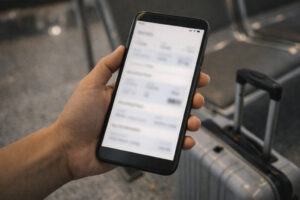 For flights, the cleanest habit is to buy direct from the airline website or app when possible. That often makes itinerary changes, baggage add-ons, and refund or rebooking requests less confusing. For the land leg, use the official booking channel of the bus company or your chosen transfer provider whenever that is available, and double-check the pickup point rather than relying on memory.
If you are still building your system for multi-leg travel, this Philippines travel planning guide is a good companion read because the trip works better when each booking detail is easy to retrieve under pressure.
What to Screenshot or Save Before Travel Day
Save these on your phone in one album or folder: your booking reference or PNR, full itinerary, baggage allowance, seat selection if any, online boarding pass, bus confirmation, hotel booking, and the hotel cancellation deadline if you reserved a buffer night. Also save the exact terminal, pickup instructions, and a contact number for the driver, bus line, or accommodation.
This matters because airport Wi-Fi can be unreliable, battery drains faster than expected, and a single missing detail can slow down the whole day. If you are managing a group trip, send the same file set to at least one other traveler as backup.
Reality Check: The smartest planning move is often administrative, not glamorous. Clear screenshots save more stress than a perfect packing list.
Luggage Rules, Terminal Friction, and the Road Leg
Baggage Traps on Fly-Then-Bus Trips
Keep baggage rules simple and visible. On Cebu Pacific, a common basic rule travelers watch is the 7 kg hand-carry allowance, and budget airlines often check both weight and bag count more closely than people expect. For checked baggage, another important rule of thumb is the 32 kg single-piece cap many airlines apply; even if you paid for a larger checked total, one bag that exceeds the per-piece limit may need to be repacked or may not be accepted.
This matters even more on Davao City to La Union because the trip does not end at the airport. You may still have to load your bags into a bus compartment, walk through a terminal, or handle them during a transfer. Smaller, manageable luggage often feels better than squeezing every kilo into one huge case.
Clark Transfer Friction to Expect
Clark usually feels more straightforward than Manila, but it is still wise to expect a little friction. You may wait for pickup coordination, walk farther than expected to your ride point, or need to confirm whether your bus leaves from the airport area or from another terminal. This is where reading a general Philippines public transport guide helps, especially if you are not used to combining flights with intercity buses.
The main comfort tip here is timing: if your Clark arrival is already late in the day, ask whether forcing a same-night ride still feels worth it. A short airport hotel stay can be the calmer call.
Manila Transfer Friction to Expect
Manila asks more from travelers. NAIA congestion, possible terminal transfer needs, longer exit times, and city traffic can all eat into your plan. If your next step is a Manila to La Union bus, pay attention to how long it actually takes to move from the airport to the bus departure point, not just to the time the bus leaves on paper.
Separate-ticket itineraries need extra care here. If your booking chain is not protected end to end, a delayed arrival may leave you dealing with missed bus timing or a more expensive same-day fix. That is why Manila rewards conservative planning more than optimistic planning.
Reality Check: Luggage rules and terminal transfer details are where many “easy” itineraries become tiring. The smoother trip is usually the one with fewer tight handoffs.
Backup Plans if Delays or Cancellations Affect the Trip
Delay Scenarios That Matter Most
 Your delay backup plan should cover three common problems: the flight leaves late, the baggage takes too long, or the road transport timing no longer works. For the first two, the best defense is a schedule cushion. For the third, decide before travel day whether your fallback is a later bus, a private transfer, or an overnight stay near the airport.
If keeping stress low matters more than squeezing every peso, do not book the last possible bus connection of the day after your flight. Give yourself a route that can absorb a small airline delay without collapsing the rest of the journey.
Late Arrival Safety and Overnight Fixes
If you land too late for a comfortable same-day transfer, it is usually wiser to stay near the airport and continue in daylight. That is especially true for tired travelers, solo travelers, families with children, and anyone arriving during rain or uncertain road conditions. For broader late-arrival habits and practical reminders, this Philippines travel safety guide is worth reading before the trip.
Reality Check: An overnight stay is not a failure of planning. Sometimes it is the exact decision that keeps a long travel day from turning messy and expensive.
Weather and When a Buffer Night Makes Sense
Should You Go Straight to La Union or Sleep Near the Airport First?
Go straight only when the timing is clean: your flight lands early enough, you are comfortable with your baggage setup, and your transfer is already easy to execute. Add a buffer night when any of those pieces feel shaky. A buffer night also makes sense if you are traveling during peak holiday traffic, arriving in the evening, or simply want your first morning in La Union to feel calmer instead of rushed.
This is also a good place to be honest about trip style. Some travelers do not mind a long same-day push. Others would rather protect sleep and arrive in better shape. Neither is wrong, but comfort-based planning usually favors the buffer night more often than first-time planners expect.
Check Northern Luzon Conditions Before the Road Leg
Before you leave the airport, check Northern Luzon conditions, not just the weather in Davao or at your departure point. The road leg matters here. A practical starting point is the PAGASA Northern Luzon forecast, plus this broader Philippines weather travel guide if you are traveling during wetter or more changeable months.
If the weather looks rough, the calmest answer may be to pause, rest, and continue when visibility and road conditions are better. Once your arrival day is lighter, you can ease into the destination with plans like these free things to do in La Union on a rest day instead of forcing a packed first itinerary.
For most travelers, the final recommendation is simple. Choose Clark when you want the cleaner, shorter land transfer and a generally easier handoff. Choose Manila when flight options, schedule flexibility, or fare value are clearly better, but expect more friction and be honest about whether you need a buffer night. And if weather, delays, or fatigue start stacking up, it is completely reasonable to postpone the road leg by a few hours or overnight. That is often the smartest way to do Davao City to La Union without guessing your way through the hardest parts.