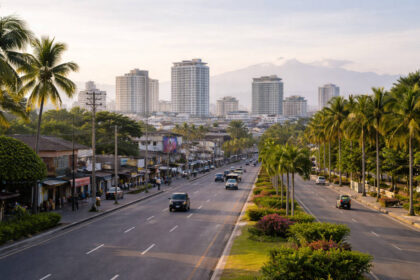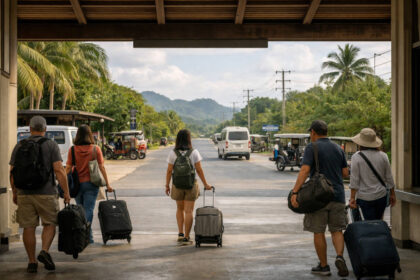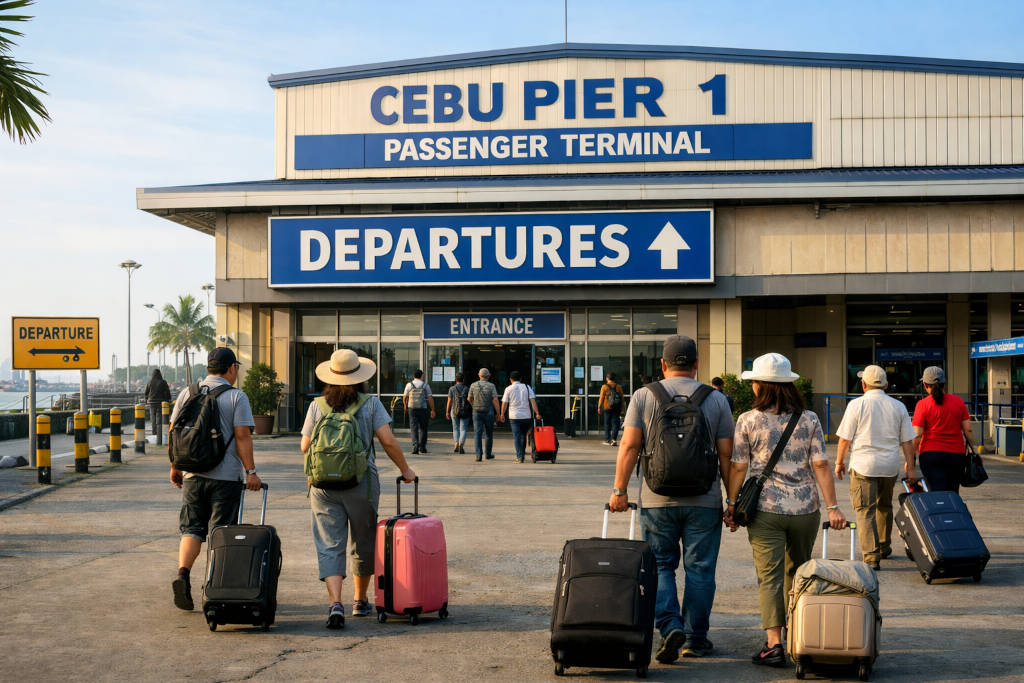
Most trips from Cebu City to Bohol are straightforward, but “straightforward” depends on planning for the port process—getting to Cebu Pier 1 on time, handling terminal entry, respecting the boarding cutoff, and staying calm if weather or sea conditions shift the schedule. The goal is not just reaching Bohol, but reaching Bohol without feeling rushed, hungry, or uncertain about where to go next.
This guide compares the main options for Cebu City to Bohol, with the fast craft ferry from Cebu Pier 1 to Tagbilaran Port as the primary route. It also covers a practical alternative via Tubigon Port, and a short “if relevant” look at flying based on total door-to-door time and transfer friction. Along the way: realistic time buffers, cost buckets, where to buy tickets, what to screenshot, luggage realities, port friction points, and a backup plan for weather delay or cancellation.
Start Here: The Lowest-Stress Way to Go from Cebu City to Bohol
Quick summary of best default option and who it fits
The best default for most travelers is the fast craft ferry from Cebu Pier 1 to Tagbilaran Port. It fits travelers heading to central Bohol, Panglao, and many common hotel bases because transfers from Tagbilaran are familiar and frequent. It also keeps your plan simple: one main sailing route, one main arrival port, then onward land transport.
Reality Check: The “easy” part is the sailing. The stress usually comes from the hour before boarding: queues, terminal seating limits, last-minute ticket questions, and strict cutoff times.
Quick summary of Plan B option and who it fits
A practical Plan B is choosing a ferry that arrives at Tubigon Port. This can fit travelers whose Bohol destination is closer to Tubigon (or whose schedule aligns better with Tubigon sailings), and it can be helpful when Tagbilaran Port departures are sold out or timings are inconvenient. The tradeoff is planning onward transport a bit more carefully because your arrival point is different.
For first-time logistics habits—buffers, offline copies, and simple “what if” planning—keep Philippines Trip Planning Guide bookmarked as a baseline.
Option 1: Fast Craft Ferry Cebu Pier 1 to Tagbilaran Port
Realistic door-to-door time with buffers
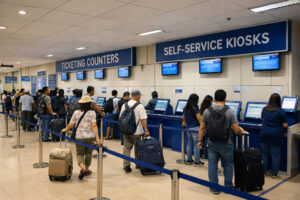 A realistic Cebu City to Bohol door-to-door estimate is not just “sailing time.” It includes the full chain:
• Hotel to Cebu Pier 1 (traffic can be unpredictable)
• Early arrival buffer (ticket checks, terminal entry, and security-style screening)
• Terminal fee step when applicable and any additional entry lines
• Waiting time + boarding queue + strict boarding cutoff
• Sailing time (fast craft)
• Disembark time + exit flow at Tagbilaran Port
• Onward transfer to Panglao or another base (plus hotel check-in timing)
As a planning habit, avoid booking a fixed-time tour on the same day as your sailing unless you have a big buffer. Even a small weather delay or port queue can push your arrival later than expected.
Reality Check: The day feels calmer when “arrival at Tagbilaran” is treated as mid-journey, not the finish line.
Step-by-step: Cebu City to Cebu Pier 1, terminal process, boarding, arrival
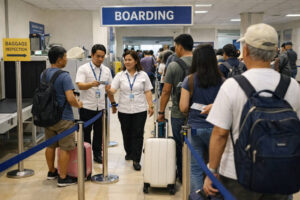 Step 1: Get from Cebu City to Cebu Pier 1 with time to spare. Pick the simplest transport mode for your group and luggage, then add a buffer for traffic and loading time. If you want a practical transport refresher for moving around the city, use How to Get Around Cebu City.
Step 2: Enter the terminal and complete the port process. Expect checks on your e-ticket (or booking reference), possible baggage checks, and a flow that can change during peak hours. Seating can be limited; keep water and a small snack accessible.
Step 3: Respect the boarding cutoff. Fast craft operators often enforce cutoff times strictly. Treat cutoff time as “you must already be in the right lane,” not “you should be arriving at the gate.”
Step 4: Board the fast craft and keep essentials in a day bag. Keep IDs, wallet, phone, power bank, and motion-sickness meds (if needed) in a small bag that stays with you.
Step 5: Arrive at Tagbilaran Port and follow the exit flow. Disembark lines can take time, especially when multiple sailings arrive close together. Move calmly, keep your group together, and step aside before checking maps.
For general expectations on ferry travel—queues, boarding routines, and what “normal” looks like at busy terminals—skim the Philippines Ferry Travel Guide. For broader public transport context, the Philippines Public Transport Guide is also useful, especially if you plan to connect onward by shared transport.
After arrival: Tagbilaran Port to Panglao or other bases with low-stress choices
After Cebu City to Bohol via Tagbilaran, the next step is your land transfer. For a low-stress arrival:
• If heading to Panglao: choose a clear, direct transfer option (hotel transfer, pre-arranged transport, or a reputable point-to-point ride) and keep the hotel pin saved offline.
• If heading to countryside routes: avoid planning an immediate long drive right after disembark if you are arriving midday. Build a short rest or meal break first.
• If traveling with kids or seniors: prioritize comfort and shade, and avoid waiting in direct sun while deciding transport.
If you are still choosing where to base yourself, this is a helpful next read: Best Beaches in Bohol.
Reality Check: The first hour after Tagbilaran arrival is where small stress builds—heat, hunger, and map-checking. A pre-saved pin and a simple transfer plan keep it easy.
What to screenshot and save before you leave
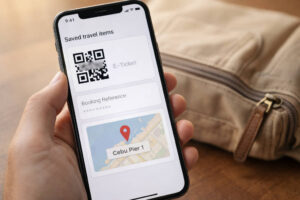 Before departing for Cebu Pier 1, save these in one offline-friendly folder:
• Booking reference and passenger details
• E-ticket / QR code (if issued)
• Payment proof (email receipt, app confirmation, or transaction record)
• Valid IDs (clear photos as a backup)
• Emergency contacts (one local, one at home)
• Accommodation booking (address + contact number)
• Offline map pin to Cebu Pier 1 and to your destination port (Tagbilaran Port or Tubigon Port)
• A screenshot of the sailing schedule page you booked (useful if signal is weak in the terminal)
For checklist habits that reduce travel-day friction, revisit Philippines Trip Planning Guide and apply the same “save it before you need it” approach.
Option 2: Ferry to Tubigon Port as a Practical Alternative
Who should choose Tubigon (destination fit and schedule fit)
Tubigon Port can be a smart choice when it matches where you are going in Bohol (for example, if it shortens your onward land travel) or when departure times line up better with your Cebu schedule. It can also help when Tagbilaran sailings are full or when you prefer a different arrival flow.
Reality Check: Tubigon is not automatically “faster” or “slower.” It depends on your final destination and how smooth your onward transfer is.
Realistic door-to-door time and friction points
The door-to-door chain is similar: hotel to pier, early arrival buffer, terminal process, cutoff, sailing, disembark, then onward transfer. The difference is the last segment: your land travel after Tubigon may be longer or shorter than after Tagbilaran depending on where you are staying.
Friction points are also similar: peak-hour lines, limited seating, occasional schedule shifts, and payment uncertainty (some counters may be cash-focused). Treat the terminal like a low-signal environment and keep your key files offline.
Onward transfer planning after Tubigon
Plan your Tubigon arrival like a “transfer checkpoint.” Before departure, decide:
• Your preferred onward transport type (direct hire vs shared ride)
• Your first stop address (hotel or a known landmark)
• A realistic arrival window for check-in
If your destination is on Panglao, check whether your Tubigon transfer time still feels comfortable—sometimes Tagbilaran is simpler for Panglao-based stays, even if the sailing time is similar.
Reality Check: Tubigon works best when you have a clear onward plan. “Arrive first, decide later” can turn into long waiting in heat.
Flight Option If Relevant: When Flying Might Make Sense
Total time reality: airport transfers, check-in, waiting, and onward land travel
Flights can look faster on paper, but the true comparison for Cebu City to Bohol is door-to-door. Flying includes: transfer to the airport, early check-in and security, waiting, flight time, baggage claim (if any), then onward land travel. For many travelers, that “airport chain” can feel as long as a ferry day—especially if you already have a hotel near the pier or if you are traveling with bulky luggage.
Best use cases and when it usually adds stress
Flying may make sense if you are connecting from another flight itinerary, if ferry schedules do not fit your day, or if sea conditions are likely to disrupt sailings. It can add stress when it introduces multiple transfers, strict baggage rules, and tight timing windows—especially if you then still need a long land transfer to your final Bohol base.
Reality Check: If your main goal is a calm arrival, fewer transfers often beats the “fastest-looking” option.
What It Costs in Real Life
Fare variability and peak-season effects
Ferry fares can change based on operator, seating class, travel dates, and demand. Peak seasons, weekends, and holidays can mean higher fares and earlier sellouts. The best planning move is not guessing a number—it is budgeting in buckets: ticket + terminal-related fees + transport to the pier + onward transfer after arrival.
Terminal fees and small port costs to expect
Expect possible terminal fee steps and small port-related costs depending on the terminal’s process and your ticket type. Keep receipts whenever you pay at a window. If the process is unclear, ask what the payment covers and whether you will need the receipt again at another checkpoint.
Budgeting tips for cash, small bills, and receipts
Carry small bills for port payments and quick needs (water, snacks). Even if some services accept cashless payments, it is safer not to rely on it inside terminals where signal can be weak. Keep a zip pouch for receipts so they do not crumple or disappear between checkpoints.
Reality Check: The most common “cost stress” is not the fare—it is being short on small bills at a busy counter when the line is moving.
What to Buy Where and What to Screenshot
Tickets and policies to save
For Cebu City to Bohol tickets, prioritize official channels first: the operator’s official website or official ticketing counters. If you need a third-party booking channel, stick to reputable, well-known platforms and confirm that the ticket is valid for terminal entry (and that you understand the change and rebooking rules).
For schedule reference and updates, use Official OceanJet Schedule for Cebu City to Tagbilaran as a practical schedule check for the Tagbilaran route when planning your day.
A tight travel-day checklist of what must be on your phone
Save these before leaving your hotel (and keep them offline when possible):
• Booking reference + passenger details
• E-ticket QR code
• Payment proof
• Valid IDs (photo backup)
• Emergency contacts
• Accommodation booking confirmation
• Offline map pins: Cebu Pier 1, Tagbilaran Port or Tubigon Port, and your hotel
• Screenshot of your chosen sailing schedule and any rebooking instructions
If you like checklist-style reading as a planning habit, Bakasyon Checklist-Style Guides is an optional example of the quick-scan format (different destination, same idea).
Luggage Rules and Packing That Reduces Hassle
What to keep in your day bag
Fast craft travel feels easier when essentials are accessible. Keep these in a day bag:
• IDs, wallet, phone, and power bank
• Tickets and screenshots (plus one printed backup if you prefer)
• Meds (including motion-sickness support if needed)
• Water and a light snack
• A light layer (terminals and fast craft cabins can feel cold to some travelers)
What makes boarding and transfers harder
On fast craft, baggage rules and checks can vary by operator and day. Bulky bags slow you down in queues and make seat storage harder. Too many loose items also increase the risk of leaving something behind during disembark. If you can, consolidate into fewer pieces and avoid oversized hard cases unless truly needed.
Reality Check: Even when baggage weight checks are not strict, “awkward baggage” still costs time—lifting, squeezing through lanes, and finding space onboard.
Low-Stress Timing Tips
Best arrival strategy at Cebu Pier 1
Arrive early enough to handle lines without panic. The practical strategy is to be at the terminal well before the boarding cutoff, not just before departure time. Use the extra minutes to locate your lane, confirm your boarding gate, and buy water before seating fills up.
Crowds and peak windows to avoid when possible
Peak windows often happen around weekends, holidays, and periods when many travelers are moving between islands. If you have flexibility, choose sailings that avoid the most crowded blocks of the day. If you cannot avoid peak times, reduce stress by packing light, saving all screenshots offline, and keeping small bills ready for any on-site payments.
Reality Check: Crowds are manageable when you do not need to make decisions in the middle of them. Decide your steps before you arrive at the terminal.
Delay and Cancellation Playbook
What to do if the ferry is delayed
If a weather delay or operational delay is announced, switch from “rushing mode” to “comfort mode.” Confirm status through official channels, keep your group together, and assume the delay could extend. Buy water and a light meal early if nearby options are limited. Avoid booking tight same-day tours in Bohol; if you already booked one, message the provider with your updated arrival window.
What to do if sailings are canceled due to weather or sea conditions
If sea conditions cancel sailings, prioritize safety and clear information. Ask about the next available sailing and rebooking steps. Consider these calm pivots:
• Shift to the next sailing the same day if operations resume and you still have daylight for arrival and transfers
• Check if Tubigon Port sailings fit your destination better (only if your onward plan remains simple)
• Overnight in Cebu City and travel the next morning, rather than arriving exhausted late at night
• Protect hotel bookings by messaging your accommodation early with updated timing
How to rebook calmly and protect the rest of your itinerary
Rebooking is easier when your documents are organized. Keep your booking reference, payment proof, and ID ready. Follow the operator’s instructions for changes, and screenshot any new confirmation immediately. For practical, Philippines-specific safety reminders during disruptions—crowds, scams, and how to make calmer choices under pressure—keep Travel Safety in the Philippines Guide accessible.
Reality Check: The best backup plan for Cebu City to Bohol is not a complicated reroute—it is having time buffer, snacks and water, saved documents, and the willingness to move the plan by one day if conditions demand it.
Cebu City to Bohol FAQs
What is the easiest way to travel from Cebu City to Bohol?
The easiest option for most travelers is the fast craft from Cebu Pier 1 to Tagbilaran Port, then a direct transfer to Panglao or your chosen base. It keeps the route simple and familiar.
How long is Cebu City to Bohol door-to-door?
Door-to-door time depends on traffic to the pier, how early you arrive, terminal lines, the boarding cutoff, sailing time, and your onward transfer after arrival. The calm planning approach is to include buffers for peak-hour queues and treat port arrival and disembark time as real time blocks, not “instant” steps.
Tagbilaran or Tubigon which is better?
Tagbilaran Port is usually best if you are heading to central Bohol or Panglao and want the most straightforward arrival flow. Tubigon Port can be better if it matches your destination or schedule and you have a clear onward transfer plan.
How early should I arrive at Cebu Pier 1?
Arrive early enough to clear terminal entry, possible baggage checks, and lines without rushing—well ahead of the boarding cutoff. The safer your buffer, the less you will feel the pressure of strict cutoff enforcement.
What should I screenshot or save for a smooth travel day?
Save your booking reference, e-ticket QR code, passenger details, payment proof, ID photos, emergency contacts, accommodation booking, and offline map pins for Cebu Pier 1 and your destination port. Also save a screenshot of the schedule and any rebooking instructions.
What is the best backup plan if ferries are canceled?
Confirm official status early, avoid tight same-day tours, and be ready to shift to the next sailing or travel the next morning. If it fits your destination, consider Tubigon Port as an alternative. If conditions are unsafe, the calm choice is to overnight in Cebu City and protect the rest of your itinerary with clear rebooking steps and saved receipts.
Next Steps After You Arrive in Bohol
Once you complete Cebu City to Bohol, keep the first day light so the journey does not bleed into your vacation energy. For official destination planning notes and updates, the Bohol Tourism Office is a useful reference. For a simple route idea that links both islands into a smooth trip, see Cebu and Bohol Itinerary Loop.
If you are still polishing your Cebu side of the plan before leaving, Cebu Travel Guide is a helpful related read. And when you are ready to browse more planning-friendly topics, use Tips and Inspiration as the next path.