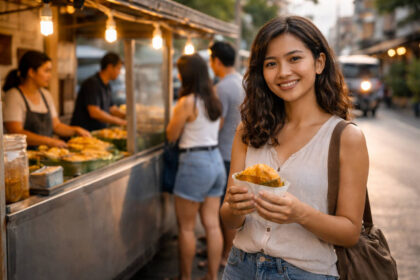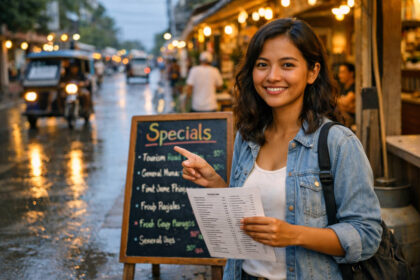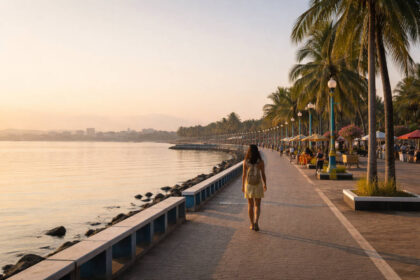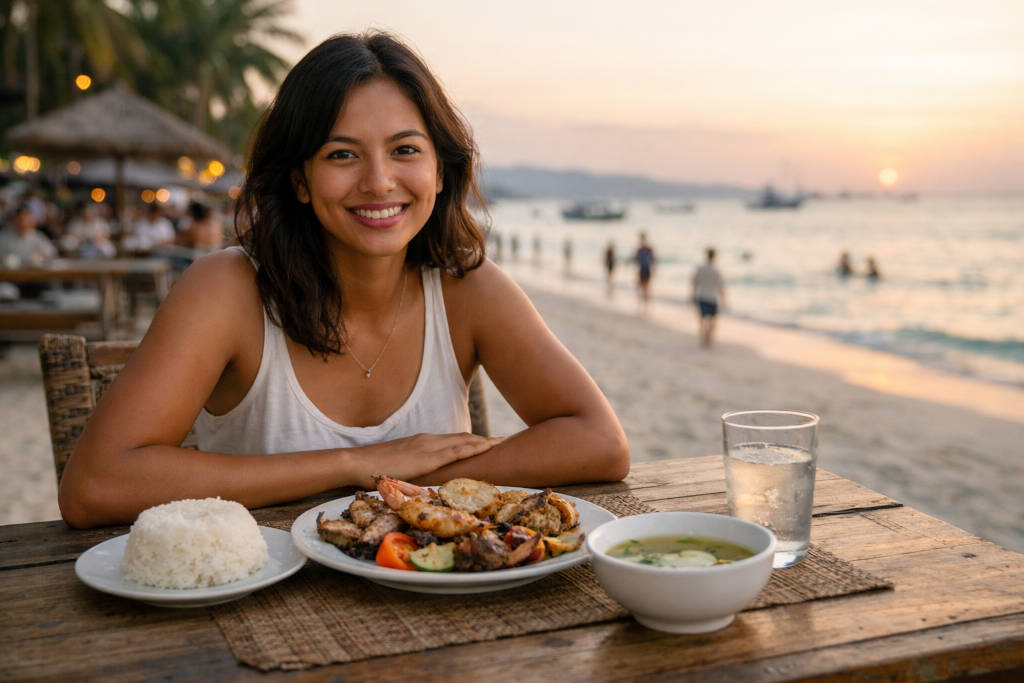
Food plans can make or break a Boracay day—especially when you’re juggling heat, beach time, and a limited appetite for surprises. This guide to Best Restaurants In Boracay is intentionally not a rigid “Top 10.” Instead, it groups your options by comfort level, budget, and location, then gives you simple cues for choosing well on the spot. Menus, hours, prices, and popularity can change quickly in Boracay, so the goal is to help you decide with confidence even when details shift.
If you’re building a full itinerary, start with the broader Boracay guide hub, then come back here when you’re ready to plan meals around your beach schedule.
At-a-Glance
Best time window: Drier months usually make dining easier (more open-air comfort and steadier supply), but any season works with a flexible plan. A quick check of the Philippines Weather Guide helps you plan around rain bursts and strong winds that can affect seating, seafood availability, and boat-delivered produce.
Realistic travel time between food spots: Most dining areas are walkable along White Beach, but midday heat and sand can slow you down. Short tricycle rides are common for the main road.
Budget band: Boracay can be budget-friendly with carinderia-style rice meals and BBQ skewers, or more comfortable with air-conditioned cafés and hotel dining. Plan for “choice points” per meal.
Crowd risk: Dinner peaks and sunset hours fill up quickly around Station 2 and D’Mall. Breakfast and late lunches tend to be calmer.
Rain or heat backup: Keep one indoor option in mind (air-conditioned cafés, covered walkways near D’Mall, or hotel restaurants) so you’re not forced into the first open table you see.
Reality Check: In Boracay, the “best” place at 6:00 PM can feel different at 8:00 PM when queues form and kitchens rush—your plan should prioritize timing and comfort, not perfection.
What Boracay Is Known For Food-Wise
Boracay is known for beach-friendly, easy-to-love meals: grilled Seafood, sizzling plates, Filipino Food classics, and desserts you can carry while walking the shoreline. You’ll see everything from simple rice meals to polished beachfront dining. For first-timers, it helps to treat food as part of your logistics—hydration, shade, and timing matter as much as taste.
Easy First-Timer Favorites (Seafood, Fruit Shakes, Snack Desserts)
Grilled Seafood and barbecue: Along White Beach, you’ll often find grilled fish, chicken, pork, and skewers that make an easy “no-thinking” meal with rice. If you want fewer surprises, choose items that are cooked to order and served hot, and pair them with plain rice and a simple soup.
Fruit Shakes: Fruit Shakes are practically a Boracay ritual—mango is the classic. For a safer, less “heavy” option, ask for “less sugar” and skip add-ons if you have a sensitive stomach. If dairy is a trigger, ask if the shake uses milk, ice cream, or just fruit and ice.
Snack desserts: You may spot Calamansi Muffins and other small baked goods in cafés around Station 2. Baked items are often a good choice when you want something gentle, especially paired with hot coffee or tea.
Reality Check: Beach cravings are real, but heat changes appetite. Many travelers feel better doing lighter snacks in the sun, then a fuller meal in cooler hours.
Local-Feeling Choices You Might See On Menus (Filipino Classics, Grilled, Soups)
Filipino classics: Look for sinigang (sour soup), tinola (ginger chicken soup), adobo (soy-vinegar braise), and garlic fried rice. These can feel familiar in structure—broth, rice, and a clear “main”—even if flavors are new.
Grilled and sizzling plates: In many casual restaurants, grilled liempo (pork belly), inihaw na manok (grilled chicken), and sizzling sisig appear on menus. If you’re cautious, pick dishes that arrive visibly hot and fully cooked, and ask for sauces on the side.
Noodle and rice bowls: Pancit and rice meals are convenient when you want a predictable portion. If you’re unsure about spice or richness, ask for a mild version and keep condiments optional.
Reality Check: “Filipino Food” varies by kitchen. If one dish feels too sweet, oily, or salty, switch to grilled items and soups—these tend to travel better across different cooking styles.
Best Restaurants In Boracay Without Overthinking It
Rather than chasing a single “best,” it helps to decide what kind of meal you need today: quick and filling, cool and comfortable, or slow and scenic. Once you know that, Boracay becomes simple—because the island is set up to meet all three needs within the same walkable strip.
How To Choose Fast: Budget, Comfort, Location, And Crowd Signals
Budget: If you want a low-stress bill, prioritize places with clear menu prices posted outside or on a board. If you can’t see prices until you’re seated, ask for a menu first.
Comfort: For midday meals, shade, ventilation, and cold water matter. Air-conditioned cafés can cost more, but they also protect your energy—especially on long beach days.
Location: Near D’Mall and Station 2, options are dense and walkable. Station 1 leans calmer and more resort-adjacent. Station 3 often has more budget choices and a quieter pace at certain stretches.
Crowd signals: A moderate crowd is often a good sign (steady turnover, food not sitting too long). Extremely long queues may mean you’ll eat late and rushed. If you’re hungry now, look for “busy but moving.”
Reality Check: In peak seasons, even solid places can feel chaotic at dinner. If the vibe is too hectic, it’s okay to step away and eat earlier or later.
Station 1 Vs Station 2 Vs Station 3: What Changes For Dining
 Station 1: Often best for quieter, slower meals and beachfront views—especially if you’re pairing dining with a calmer beach block. You’ll see more hotel and resort dining categories here, plus some polished standalone restaurants.
Station 2: Usually the best mix of budget and comfortable restaurants because it’s the most central area for foot traffic, D’Mall, cafés, and mid-range dining. If you want variety without long walks, Station 2 is the practical center.
Station 3: Often works well for budget meals, simple grills, and a slightly less compressed dining scene—especially if you’re staying nearby and prefer quick, repeatable options.
Where you sleep affects where you naturally eat. If you’re still choosing an area, the guide Where To Stay In Boracay can help you match Station vibes with your meal style (quiet mornings, late-night snacks, or easy access to D’Mall).
Getting Around To Eat: Port To Hotel, Main Road, And Beach Paths
Boracay dining is walk-friendly along White Beach, but the main road is useful when you want to skip sand or reach places behind the beachfront strip. If you’re coordinating arrival day meals (port to hotel) or planning day-to-night movement, the Philippines Public Transport Guide is a helpful primer on how local transport typically works in the Philippines, including payment expectations and simple etiquette.
Reality Check: Short distances can feel longer in heat or rain. Building in a “nearby backup meal” prevents cranky decisions.
A Simple Restaurant Picking Checklist (Cleanliness And Comfort)
Food choices in Boracay don’t have to be anxious—but a quick scan helps you avoid common issues. Think of this as a 30-second checklist before you commit to a table.
Cleanliness Cues Before You Sit Down
Look at high-touch areas: Tables, menus, condiment bottles, and door handles show how often cleaning happens. You’re not looking for perfection—just consistent care.
Watch the workflow: Staff using tongs or gloves for ready-to-eat items, covered ingredient bins, and a clear separation between cash handling and food handling are good signs.
Check water and ice handling: If a place is busy, ask for sealed bottled water if you’re sensitive. If you’re unsure about ice, you can order drinks without ice (or ask if they use purified ice).
Reality Check: Beach environments bring sand and humidity. A few grains of sand near the entrance can be normal—what matters is how the kitchen and serving areas are managed.
Comfort Cues (Shade, Ventilation, Seating, Restroom, Handwashing Access)
Shade and airflow: In hot hours, a shaded table with airflow can make food feel easier on your stomach. If it’s extremely humid, air-conditioned dining can be worth the extra cost for comfort.
Seating and spacing: If chairs are packed tightly and staff struggle to move, service may feel rushed. A slightly calmer layout often means smoother ordering.
Restroom and handwashing access: You don’t need a luxury restroom—just one that looks maintained. A visible handwashing station or easy access to soap and water is a practical green flag.
Reality Check: Some small eateries are excellent but simple. If the comfort level isn’t right, you can still buy takeout and eat where you feel relaxed.
Red Flags That Are Worth Walking Away From
No visible prices and evasive answers: If staff can’t explain pricing clearly, that’s a sign to choose somewhere else.
Food sitting uncovered in heat: For sensitive stomachs, this is a skip. Favor places cooking to order.
Overly aggressive “pulling”: A friendly invite is normal in tourist areas; pressure tactics are not required for a good meal.
Reality Check: Leaving is not rude. In Boracay, there are many alternatives within a short walk.
Pricing Cues And Menu Math In Boracay
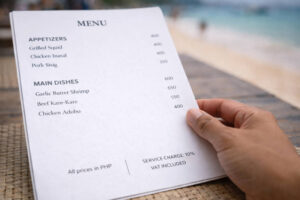 Boracay pricing can feel confusing because some menus include service charge and VAT while others add them later. A calm “menu math” habit keeps your bill predictable and helps you compare places fairly.
Menu With Prices, Service Charge, VAT Included, And “Plus Plus”
Menu price clarity: Look for notes like “VAT included,” “service charge included,” or “++” (often read as “plus plus,” meaning extra charges may be added). If it’s not stated, ask: “Service charge included na po?”
What matters most: The final total. If you’re budgeting, ask for an estimate for your full order before confirming: “Total estimate po for this, including service?”
Tipping: If a service charge is already on the bill, extra tipping is optional. If service is thoughtful and there’s no service charge, a small tip can be appreciated but not required.
Reality Check: In busy beachfront areas, prices can be higher simply because rent is higher. Paying more isn’t automatically a tourist trap—unclear pricing is the bigger issue.
Portion Language In The Philippines (Good For Sharing, Solo, Platter)
“Good for sharing”: Often means 2–3 people, sometimes more if paired with rice. Ask how many it serves if you’re unsure.
“Platter”: Usually a mixed set (grilled items or appetizers). It can be good value if you’re sharing, but ask what’s included.
Rice expectations: Rice is often ordered separately unless the menu says it’s included. If you want a predictable meal, choose “rice meals” (ulam plus rice) for built-in portions.
Reality Check: Some menu photos look larger than reality. When in doubt, ask: “Good for one lang po ba ito?”
Payment Basics (Cash, Cards, Receipts, Split Bills)
Cash is still useful: Especially for small eateries, quick snacks, and market-style purchases. Keep smaller bills for smoother payments.
Cards vary: Many mid-range and hotel restaurants accept cards, but signal issues can happen. If paying by card matters, ask before you sit down.
Receipts: It’s reasonable to request a receipt, especially if you’re checking service charge and VAT lines.
Split bills: Not all places love multiple splits. If you’re in a group, it helps to assign one payer and settle internally.
Reality Check: Card terminals can be slow during peak hours. If you’re rushing to an activity, pay earlier or choose a quick-cash spot.
What To Order If You Want Safe Flavors
 If your goal is “no surprises,” you can still eat well in Boracay. The safest approach is to choose fully cooked dishes served hot, keep sauces optional, and avoid heavy raw components when your stomach feels uncertain.
Safe Filipino Picks (Grilled, Soups, Simple Stir-Fries, Rice Meals)
Grilled chicken or fish with rice: Easy, familiar structure, and usually customizable. Ask for sauce on the side.
Simple soups: Tinola (ginger-based) and some clear broths can feel gentle. If you’re sensitive, avoid very creamy soups or those with uncertain heat holding.
Stir-fries: Choose vegetable and meat stir-fries that are cooked to order and served steaming. Pair with plain rice.
Breakfast any time: Eggs, toast, and fruit can be a comfortable reset if you’re tired or adjusting to travel.
Reality Check: “Safe” doesn’t mean boring. In Boracay, safe often just means simpler seasoning and fresher timing.
Safe International Picks (Pizza, Pasta, Burgers, Wraps)
Pizza: Usually a dependable group meal with clear portions. If you’re sensitive, choose simpler toppings.
Pasta: Tomato-based sauces tend to be more predictable than creamy sauces in hot weather. Ask for sauce on the side if you want control.
Burgers and wraps: Ask for well-done patties if you prefer. Skip raw veggies if your stomach is unsettled and choose cooked sides instead.
Reality Check: International menus can still be adjusted to local supply. If a dish tastes different than expected, it’s not necessarily “bad”—just a reason to order simpler next time.
How To Customize Politely (Less Spicy, Sauce On The Side, No Mayo, No Peanuts)
In most Boracay restaurants, polite customization is normal. These phrases are widely understood:
Easy ordering phrases to use in the Philippines:
“Pwede po less spicy?” (Can it be less spicy?)
“Sauce on the side po.”
“No mayo po.”
“No peanuts po—may allergy.”
“Well done po, please.”
“Takeout po / For takeout po.”
“May service charge na po ba?” (Is service charge already included?)
Reality Check: During peak dinner rush, complex custom requests may slow your order. If timing matters, keep it simple: grilled, soup, rice.
Budget Vs Comfort: Practical Grouped Recommendations
This is the heart of how many travelers actually eat in Boracay: repeatable choices that match your day. Think in categories, then pick the nearest good option with clear pricing and a comfortable vibe.
Budget And Quick Eats (good for simple meals and snacks)
BBQ stands along White Beach: Great for quick skewers, grilled items, and rice when you want something warm without a long sit-down. Look for posted prices and food that’s grilled to order rather than sitting out.
Small eateries near D’Mall: Often good for rice meals, noodles, and easy merienda. These can be a smart “between activities” stop because you’re close to shops, shade, and transport.
Merienda spots: Try baked snacks like Calamansi Muffins, simple bread, or lighter desserts when you want a gentle break from heavy meals.
Fruit Shakes and hydration stops: Consider this part of your food plan, not an extra. Ordering “less sugar” can help if you’re having multiple shakes in a day.
Reality Check: Budget spots can be excellent, but they move fast. If you need a slower pace, choose a café even if it costs a little more.
Save-money rest day tip: If you’re spacing out paid activities, building a “beach and snack” day can lower costs and reduce decision fatigue. Pair a simple breakfast with a late lunch, then use the Free Things To Do In Boracay guide to plan low-cost rest day ideas between meals.
Comfort And Mid-Range (good for aircon, calmer service, wider menus)
Station 2 cafés and restaurants: This is often the easiest zone for comfort dining: more indoor seating, broader menus, and a balance between price and convenience. If you’re deciding where the “best mix” is, Station 2 is usually the most reliable for variety.
Station 1 calmer meals: If you want a slower lunch with more space, look for mid-range beachfront restaurants and hotel-adjacent cafés where seating feels less compressed.
Station 3 practical repeats: Travelers who like a predictable routine often find comfort in simpler neighborhood-style restaurants and grills—especially if staying nearby.
Reality Check: “Mid-range” can still feel pricey during peak season. The win is usually comfort and consistency, not dramatic savings.
For overall budgeting and how to pace expenses across a trip, the Philippines Travel Planning Guide is a helpful companion—especially if this is your first time planning meals, transport, and island activities together.
Upscale And Occasion Meals (good for beachfront views and slower dining)
Hotel and resort dining: Often best for reliable comfort, polished service, and special-occasion pacing. Many have beachfront views and calmer seating layouts.
Beachfront “sunset dinner” category: Choose these when you can commit to slower dining. The value is the view and atmosphere, not speed.
Check the menu first guidance: For upscale places, it’s smart to ask for a menu (or scan posted menus outside) before you sit. Confirm whether service charge and VAT are included.
Reality Check: For popular sunset tables, you may need to arrive early or accept a waiting period. If you’re hungry now, eat first, then return for drinks or dessert.
How To Order Seafood Paluto In Boracay (Step-By-Step, Calm And Clear)
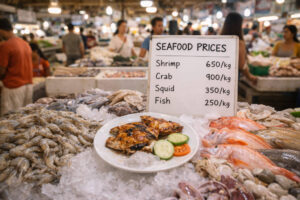 D’Talipapa Paluto is one of the most memorable Boracay food experiences, but it can also be where first-timers feel the most price anxiety. The key is to slow down and make the costs explicit before anything is cooked.
What “Paluto” Means And The Two-Part Cost (Seafood Purchase And Cooking Fee)
Paluto means you choose Seafood (often sold by weight), then pay a separate cooking fee at a nearby cookshop. Your total is usually: (1) seafood cost + (2) cooking fee + (3) rice and drinks if you add them. Because it’s two-part, always ask for a total estimate before confirming.
Reality Check: The market can be busy and noisy. If you feel rushed, step to the side and reset—better a slower order than an unclear bill.
Script For Ordering (Ask Price Per Kilo, Ask Total Estimate, Choose Cooking Style)
Use a simple script and repeat key numbers back:
1) “Magkano po per kilo nitong shrimp / crab / fish?” (How much per kilo is this?)
2) “Pwede po makita yung timbang?” (Can I see the weighing?)
3) “Mga magkano po total estimate, kasama luto?” (What’s the total estimate including cooking?)
4) “Pili tayo ng luto: grilled, garlic butter, or steamed?” (Choose a cooking style.)
If you’re avoiding surprises, pick one cooking style per seafood type and keep flavors simple (grilled, steamed, or garlic butter). Complex mixed sauces can make it harder to judge freshness and also vary widely by cookshop.
Reality Check: If someone can’t answer price questions clearly, choose a different stall. Clear communication is part of fair pricing.
Best Practices (Count Pieces, Confirm Weight, Agree On Cooking, Keep It Simple)
Count pieces for certain items: For crabs, prawns, or large shellfish, it helps to note how many pieces you’re buying so you can match it to what comes back cooked.
Confirm the weight in front of you: Watching the weigh-in helps you understand the total. If you don’t understand the unit, ask them to show the number again and confirm the total estimate.
Agree on cooking fees before cooking: Ask: “Magkano po luto for this?” Some cookshops price per kilo, others per dish.
Keep it allergy-aware: If you have a Seafood allergy, avoid shared cooking surfaces and oils—paluto setups are high cross-contact environments. Choose a non-seafood restaurant meal instead and tell staff clearly: “Seafood allergy po.”
Reality Check: Paluto is worth doing when you have time, patience, and appetite. If you’re tired, a simple grilled rice meal is often the smarter choice.
Food Safety Notes: Normal Vs Not Normal
Most travelers do fine in Boracay, but food and water changes can still affect digestion. The goal is not to fear food—it’s to recognize what’s normal, what’s not, and how to choose meals that support your trip.
Normal Travel Stomach Changes (Mild, Short, Improves With Rest And Hydration)
It can be normal to feel mildly bloated, slightly irregular, or less hungry for a day or two—especially with heat, new schedules, and rich meals. Rest, hydration, and simpler foods (rice, soup, bananas, toast) often help. If you want a practical reference, Department Of Health Food Safety Basics is a useful starting point for general food safety reminders.
Reality Check: Alcohol, sun exposure, and dehydration can mimic “food issues.” Sometimes the fix is water and rest, not a dramatic diet change.
Not Normal (Severe Or Persistent Vomiting, Fever, Blood, Dehydration Signs)
Seek help if symptoms are severe or persistent, especially repeated vomiting, fever, blood in stool, or signs of dehydration (dizziness, very dark urine, confusion). If you’re unsure, it’s better to ask for medical advice sooner rather than waiting it out. For broader reminders, the Travel Safety Guide can help you think through when to escalate concerns while traveling.
Reality Check: Many people try to “push through” to save vacation time. In reality, early care can shorten downtime.
Safer Choices For Sensitive Stomachs (Fully Cooked, Hot Served Hot, Bottled Water)
Choose fully cooked foods served hot: Grilled, steamed, and soup-based meals are often easier than creamy, raw, or heavily dressed dishes.
Be selective with raw add-ons: If you’re sensitive, skip raw garnishes and choose cooked vegetables.
Water approach: Sealed bottled water is the simplest option. If you’re uncertain about ice, request “no ice.”
What to avoid with sensitivities or allergies: If you have a Seafood allergy, avoid paluto and mixed-fryer items due to cross-contact risks. If your stomach is sensitive, be careful with raw oysters, undercooked eggs, creamy sauces in heat, and street items sitting uncovered for long periods.
Reality Check: Food safety is about probability, not guarantees. Your best control is choosing busy places with fresh turnover and clear, hot cooking.
Local rules and reminders: For destination-specific reminders, you can skim Aklan Tourist Guide For Boracay for local guidelines that may affect markets, beach use, and general conduct.
FAQ
What food is Boracay known for, and what should first-timers try?
Boracay is known for grilled Seafood, paluto at D’Talipapa Paluto, Fruit Shakes, and beach-friendly Filipino Food classics. First-timers often do well starting with grilled fish or chicken with rice, a simple soup, and a mango shake (less sugar if needed).
How do I pick a restaurant in Boracay if I’m avoiding tourist traps?
Prioritize clear menu prices, visible cleanliness in high-touch areas, and staff who can explain service charge and VAT calmly. Avoid places that won’t show prices or pressure you to sit before you see a menu.
Which station has the best mix of budget and comfortable restaurants?
Station 2 usually has the best mix because it concentrates cafés, mid-range restaurants, D’Mall, and quick eats in one walkable zone. Station 1 is calmer and often pricier; Station 3 can be more budget-friendly and routine-friendly.
What should I order if I want safe familiar flavors?
Choose grilled items with rice, clear soups, simple stir-fries, pizza, tomato-based pasta, or well-done burgers. Ask for sauce on the side and skip raw add-ons if your stomach is uncertain.
How do I order seafood paluto at D’Talipapa without overpaying?
Ask price per kilo, watch the weigh-in, request a total estimate including cooking fee, and keep cooking styles simple. If answers are unclear, choose another stall—clarity is a fair expectation.
What cleanliness cues should I look for before sitting down?
Scan tables, menus, condiments, and how staff handle money versus food. Favor places with covered ingredients, good turnover, and a maintained restroom or handwashing option.
What pricing cues matter in Boracay (service charge, VAT, menu prices)?
Look for notes like “VAT included” and whether a service charge is added. If you see “++,” confirm what gets added at the end. When budgeting, ask for a total estimate before finalizing your order.
What food safety signs are normal vs not normal while traveling?
Mild stomach adjustment can be normal and often improves with hydration and simpler meals. Not normal: persistent vomiting, fever, blood, or dehydration signs—seek help early.
What should I avoid if I have a sensitive stomach or Seafood allergy?
Sensitive stomach: avoid foods sitting uncovered in heat, heavy creamy sauces, and uncertain raw items. Seafood allergy: avoid paluto and mixed-fryer foods due to cross-contact risk, and tell staff clearly about the allergy.
What are easy ordering phrases to use in the Philippines?
Useful basics: “Pwede po less spicy?” “Sauce on the side po.” “No mayo po.” “No peanuts po—may allergy.” “Well done po.” “May service charge na po ba?”