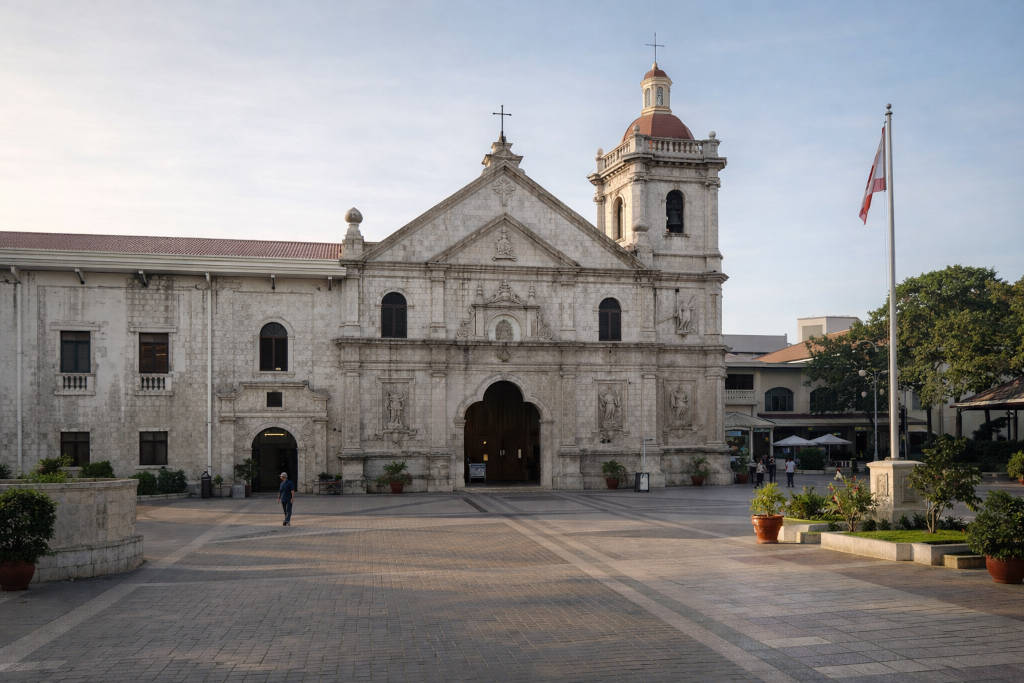
Basilica Minore del Santo Niño is one of the most visited places in Cebu City, but it’s not a theme-park stop. It’s a working church and pilgrimage site where people pray, attend Mass, light candles, and move through devotional areas with purpose. If you’re visiting for the first time, the best way to keep it low-stress is to plan around crowds, heat, and transport friction—so you can be respectful on site and still enjoy the nearby heritage landmarks at an easy pace.
This guide focuses on simple expectations: what the place is, what it feels like during a normal day, how long to budget, how to get there from common starting points (including Mactan-Cebu International Airport), and practical tips for comfort, safety, and etiquette.
At-a-Glance
Best time window: Early morning for cooler weather and calmer crowds; avoid peak mid-day heat when you can.
Realistic travel time: From central Cebu City, often 15–40 minutes depending on traffic and your starting point; from Mactan-Cebu International Airport, budget extra buffer for bridge traffic.
Budget band: The Basilica itself is generally free to enter; expect optional donations and small purchases (candles, museum ticket if you choose).
Crowd risk: Higher on Fridays, weekends, and around religious seasons.
Rain/heat backup: If it’s very hot or raining, plan a shorter Basilica visit first, then shift to nearby indoor stops (museum areas when open) or return later for a second, calmer pass.
For first-timers, it helps to review basics like what to bring, how early to start, and how to pace a downtown day. Here’s a helpful planning reference: Philippines Travel Planning Guide First Trip.
Reality Check: Downtown Cebu City can feel busy and loud outside the church area, especially at mid-day. A calm visit is less about rushing and more about choosing a low-friction time and route.
What The Basilica Minore del Santo Niño Is And Why People Visit
Plain-language overview for first-timers
Basilica Minore del Santo Niño is a historic Catholic church complex in downtown Cebu City centered on devotion to the Santo Niño (the Child Jesus). People visit to pray, attend Mass, light candles, and spend quiet time in a place that carries deep religious meaning for many Filipinos. Even if you’re visiting primarily for culture and history, treat it as an active place of worship first.
If you want a quick background before you arrive, this page summarizes key historical context: Basilica del Santo Niño.
Reality Check: You may see long lines and strong emotions—especially near devotional areas. Give people space, keep your voice low, and avoid “tour group energy” inside.
Religious and historical reasons people go
Many visitors come as pilgrims—some to give thanks, some to ask for guidance, some to fulfill a personal or family tradition. The Santo Niño devotion is closely tied to Cebu’s religious history, and for many locals, visiting the Santo Niño Basilica Cebu is part of major life moments and annual religious seasons. You’ll also see cultural practices like candle lighting and brief personal prayers at specific spots within the complex.
Reality Check: During busy periods, you might not get a long, quiet moment at the most popular devotional points. A better approach is to do a short prayer, step aside, and return later if you want more time.
Quick note for non-Catholic visitors: how to visit respectfully
It’s okay to visit if you are not Catholic. The simplest respectful approach is to observe before acting: follow posted signs, keep a modest outfit, and avoid interrupting prayer and Mass. You don’t need to participate in rituals. Standing quietly at the back or in a side area is completely acceptable if you want to take in the atmosphere without stepping into devotional lines.
Reality Check: Some areas may feel “flow-based,” where people naturally queue and move forward. If you’re unsure where to go, step aside and let others pass—don’t block aisles or doorways while deciding.
What To Expect On Site
 A working church first, tourist stop second
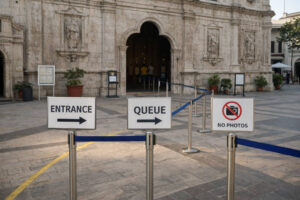
Think of the site as a place with multiple “modes” happening at once: regular churchgoers attending Mass, pilgrims doing short devotions, and visitors quietly looking around. Staff and volunteers may direct traffic during busy times. You may also encounter security checks or reminders about dress and behavior, especially near entry points or crowded devotional areas.
Reality Check: On a busy day, you might feel like you’re navigating a human current. Keep your pace slow, hold your bag close, and choose a simple plan (Basilica first, add-ons later).
Typical crowd pattern and where lines form
Lines often form at entry points, at devotional candle areas, and near popular prayer spots. Crowds tend to build after mid-morning and can spike around Mass schedules. Fridays and weekends are commonly busier, and any major religious season can change the baseline crowd level.
Reality Check: If you arrive in a peak wave, you may spend more time queueing than you expected. If your schedule allows, shift your visit earlier or later rather than forcing it at the busiest hour.
Museum and Pilgrim Center basics (what it adds, when it helps)
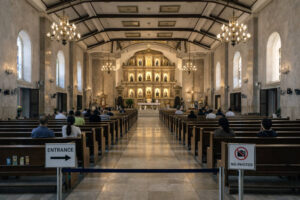 Depending on what’s open on the day of your visit, there may be a museum area and a Pilgrim Center that adds context—helpful if you want more than a quick look and prefer a structured, informational stop. This can be especially useful if the church interior is packed and you want an alternate space to slow down and learn.
Reality Check: Hours, access rules, and ticketing can change. Treat museum plans as “nice to have,” and confirm details on arrival rather than building a tight schedule around them.
Best Time To Go For A Low-Stress Visit
Best time of day for calmer crowds
Early morning is the most reliable choice if you want cooler air, fewer queues, and easier photos outside (while still respecting rules indoors). If early morning is not possible, aim for a time between crowd peaks, and avoid stacking your visit at the hottest part of the day if you’re sensitive to heat.
For Cebu heat and rainy season planning, it helps to align your day with the month and forecast patterns: Philippines Weather Travel Guide Best Months.
Reality Check: Even “calm” hours can change quickly if multiple groups arrive together. A calm visit is often about arriving before the wave, not during it.
Best days of the week and when to expect peak queues
If you have flexibility, weekday mornings are typically easier than weekends. Fridays can be noticeably busier for church visits, and Sundays often bring larger congregations around Mass times. If you want a short, quiet look inside, choose a time that doesn’t overlap with the busiest Mass-related flow.
Reality Check: If your only available time is a busy day, don’t cancel—just simplify. Focus on one main purpose (quiet look, quick prayer, or Mass), then move on to nearby stops instead of forcing a long stay.
Sinulog season and major feast days: what changes and what to plan for
During Sinulog season and around major feast days, the entire area can shift into high-demand mode: heavier crowds, more traffic, and longer waiting times. If you’re visiting in that period, plan a much earlier start, keep valuables minimal, and choose a straightforward transport plan (taxi or Grab if available) to reduce friction.
For Mass and confession timing, verify the most current schedule here before you build your day: Basilica Minore del Santo Niño schedules.
Reality Check: Festival periods can mean road closures and rerouted traffic. Build extra buffer time and have a fallback plan (shorter visit, or return at a calmer hour).
How Long To Spend
Quick visit timing (Basilica only)
If you want a simple visit—enter, look around quietly, step into devotional areas if you choose, then exit—many first-timers are comfortable budgeting about 30 to 60 minutes. Add time if you expect queues, want to sit and cool down, or plan to move slowly with elders or kids.
Reality Check: A “quick” visit can stretch if lines are long. If you’re on a tight schedule, set a gentle cut-off time and return later rather than rushing through people.
Basilica plus Mass timing
If you plan to attend Mass, budget around 90 minutes to 2 hours total, including arriving early enough to find a seat without pushing through others. If you prefer to avoid disrupting regular worshippers, arrive early and stay in one place rather than shifting seats or moving around once Mass begins.
Reality Check: On busy days, seating fills fast. If it’s crowded, it’s more respectful to stand at the back than to squeeze into the aisles.
Basilica plus museum and nearby stops timing
If you want a more rounded heritage half-day—Basilica time plus museum/Pilgrim Center (if open) plus 1–3 nearby landmarks—budget about 3 to 5 hours depending on walking pace and heat breaks. This works best with an early start so you finish the outdoor walking before the hottest part of the day.
Reality Check: A half-day loop feels easier when you keep it walkable and avoid adding distant stops that require another long ride through traffic.
How To Get There
Best starting points inside Cebu City (downtown stay, IT Park, Ayala, SM City Cebu area)
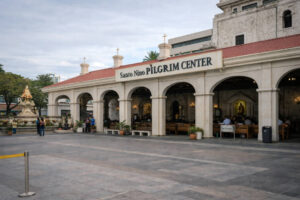 If you’re already staying in downtown Cebu City, the simplest approach is usually a short taxi or Grab ride straight to the Basilica area, minimizing transfers and guesswork. From IT Park, Ayala area, or SM City Cebu area, you can still go direct by taxi or Grab for the least friction—especially if you’re traveling in a small group or you’re trying to arrive at a specific time.
Reality Check: Cebu traffic can be unpredictable. If your plan depends on catching a specific Mass schedule or meeting someone, leave earlier than you think you need to.
From Mactan-Cebu International Airport: simplest options
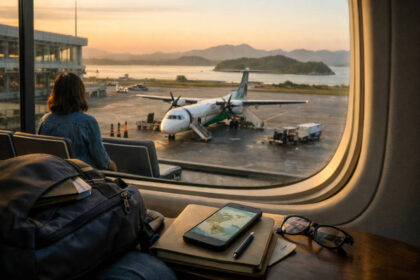
From Mactan-Cebu International Airport, the most straightforward option is a taxi or app-based ride if available, going directly to the Basilica area in downtown Cebu City. If you’re arriving during a busy time (rush hour, rain, or festival season), build extra buffer for bridge traffic and slower downtown streets near heritage landmarks.
Reality Check: Airport-to-downtown time can swing widely depending on traffic. If you land close to mid-day, consider checking in first, then visiting early the next morning for a calmer experience.
Public transport versus taxi or Grab decision rules
If you want the least planning friction, choose taxi or Grab: it’s simpler, more direct, and easier with elders, kids, or anyone carrying bags. Choose public transport if you’re comfortable with local commuting, can walk short distances, and don’t mind asking for confirmation (politely) before you get off.
For a plain-language overview of jeepneys, buses, and basic etiquette, read: Philippines Public Transport Guide Bus Jeepney Ferry.
Reality Check: Public transport can be efficient, but it can also be confusing on a first try—especially in heat or rain. If your energy is limited, save public transport for a different day and go direct here.
Parking and drop-off notes for private cars
If you’re coming by private car, plan for slower streets and limited parking options near busy heritage blocks. The easiest approach is often a quick drop-off plan: agree on a meeting point nearby, then have the driver park farther out if needed. Keep your group together, and avoid standing in driveways or entrances while deciding where to go next.
Reality Check: During peak religious days, the “last 500 meters” can be the hardest. If roads are crowded, it may be quicker to walk a short distance than to insist on door-to-door parking.
Costs And Practical Tips
Entrance and donation expectations
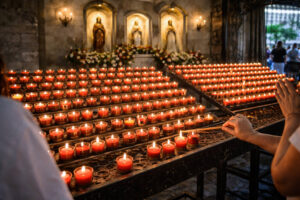 Entering the church area is typically free, and visitors often give donations if they wish. If you see donation boxes, treat them as optional and give only what feels comfortable. If you plan to light candles or buy devotional items, expect small purchases and keep small bills ready.
Reality Check: Because this is a working religious site, rules and collection practices may vary by area. When unsure, ask staff politely or observe what locals do before you follow.
Museum tickets and small on-site expenses
If you add the museum or Pilgrim Center, there may be a separate ticket. Prices and hours can change, so it’s best to confirm on arrival and keep expectations flexible. Small bills are helpful for quick transactions, especially if the line behind you is long.
Reality Check: Some sections may be temporarily closed or have restricted photography. Don’t treat it as a “must” if your main goal is a calm Basilica visit.
Cash, ATMs, and what denominations help
Carry enough cash for small purchases, optional donations, and quick snacks nearby. Smaller denominations are easier for candles, short rides, or convenience-store stops. If you rely on cards, treat them as a bonus rather than a guarantee—cash reduces decision stress in crowded areas.
Reality Check: Don’t pull out a thick wallet in a dense crowd. Prep your small bills before you join a line so you can pay quickly and move on.
Toilets, water, heat, and comfort tips
Expect that toilet access may involve a short walk, a queue, or a small fee in nearby facilities. Bring tissue, hand sanitizer, and a refillable water bottle. Cebu heat can feel sharper in paved heritage blocks, so sun protection (cap for outdoors only, sunscreen, umbrella) can make your visit calmer.
Reality Check: If you’re feeling overheated, it’s better to step aside and rest than to “push through” inside a crowded space. Take a breather, then re-enter when you’re settled.
Food: easiest low-effort options nearby
For low-effort meals, keep it simple: plan for a quick snack or early lunch near common commercial streets or mall areas before you return to the heritage core. If you prefer minimal decision-making, eat first, then do the Basilica and nearby landmarks without rushing to find food while you’re tired and sweaty.
Reality Check: When crowds surge, even simple food stops can take longer. If you’re traveling with kids or seniors, pack a small snack and water so you’re not forced into a long queue.
Safety Notes For Downtown Cebu City
Bag and phone security in crowded areas
Use basic crowd safety habits: keep your phone secure, avoid back pockets for valuables, and wear your bag in front when it’s dense. If you’re taking photos outside, step to the side first so you’re not distracted in the middle of foot traffic.
For a wider Philippines safety checklist (scams, transport habits, and what to do if you feel uneasy), use: Travel Safety Philippines Guide.
Reality Check: The area is manageable with normal caution, but crowd density can make small mistakes easier—like setting your phone down or leaving a bag unzipped.
Crossing streets, meeting points, and basic “stick together” reminders
Traffic flow in downtown can feel fast. Cross at safer points when possible, and don’t assume vehicles will stop automatically. If you’re in a group, agree on a simple meeting point (a specific corner or visible landmark) in case anyone gets separated.
Reality Check: The most common travel stress here is not danger—it’s separation and confusion. A clear meeting point and a slower walking pace solves most problems.
When to go earlier for comfort and safety
Earlier visits are usually more comfortable: cooler weather, fewer crowd pinch points, and less time standing in direct sun. If you want a calmer experience, aim to finish your main Basilica time earlier, then do optional stops after.
Reality Check: If you arrive tired after a long transit day, consider saving this for the next morning. Your experience can feel completely different when you’re rested.
Etiquette And Dress Code Basics
Conservative clothing checklist
Dress modestly: cover shoulders, and choose longer shorts, skirts, or pants. If you’re coming from a hot day outdoors, a light cover-up (scarf, thin cardigan, shawl) is an easy fix. Wear comfortable footwear—this area is best enjoyed with steady walking.
Reality Check: Even if you see casual outfits outside, the safest choice is conservative. It prevents awkward moments at entrances and helps you blend into a respectful environment.
Noise, photos, and behavior during Mass and prayer
Keep voices low, silence your phone, and avoid loud calls or speaker audio. For photos, follow posted rules and avoid taking pictures during prayer moments if it feels intrusive. If Mass is ongoing, don’t walk down the center aisle looking for the “best angle.” Step in quietly at the back or side, and stay still.
Reality Check: The best “rule” is simple: if your action would pull attention toward you, don’t do it. Choose calm, minimal movements.
How to move through devotional areas without getting in the way
If there’s a line for candles or a devotional area, join the queue and keep it moving. Don’t block passageways while taking photos or deciding where to go next. If you want a longer prayer, step aside after your turn so others can proceed, then find a quieter place to sit.
Reality Check: In busy moments, the site works like a shared system. Small courtesies—stepping aside, moving forward, keeping aisles clear—make it better for everyone.
Easy Ways To Pair It With Nearby Stops
1 to 2 hour loop: Basilica Minore del Santo Niño and Magellan’s Cross and Cebu Metropolitan Cathedral
If you want the simplest nearby pairing, keep it tight and walkable. A common short loop is Basilica Minore del Santo Niño, then Magellan’s Cross, then Cebu Metropolitan Cathedral. This works well early in the day when sidewalks feel easier and the heat is still manageable. Plan brief stops rather than long stays, and keep your water accessible.
Reality Check: The walking distance is short, but the sun can feel strong. If you’re not used to city walking in humid weather, pace slowly and take shade breaks.
Half-day loop: add Fort San Pedro and Plaza Independencia
For a calmer heritage half-day, add Fort San Pedro and Plaza Independencia after the Basilica area. This gives you a mix of church, history, and open-air space without needing another long ride. Start with the Basilica first while you’re fresh, then do the outdoor landmarks as the day opens up.
Reality Check: Outdoor stops are the first to feel uncomfortable in peak heat or sudden rain. If the weather turns, shorten the loop and keep your day flexible.
If you only want one more stop: pick the closest and simplest option
If your energy is low or time is tight, choose just one additional landmark within walking range. The “best” add-on is the one that doesn’t require negotiating another ride, another queue, and another set of decisions. Keep your plan simple: one place, then return to your hotel or next area without rushing.
Reality Check: Many Cebu City days feel better when you do fewer stops well. A calm, respectful visit beats a packed checklist.
Basilica Minore del Santo Niño FAQ
What is the Basilica Minore del Santo Niño in plain terms, and why do people visit?
It’s a historic Catholic church in Cebu City centered on devotion to the Santo Niño. People visit to pray, attend Mass, light candles, and take part in a long-standing religious tradition. Visitors also come for culture and history, but the setting is primarily a working place of worship.
Is it okay to visit if you are not Catholic, and what should you do differently?
Yes. Dress modestly, keep your voice low, avoid blocking aisles, and don’t interrupt prayer or Mass. You can observe quietly without joining rituals. If you’re unsure where to stand or how to move, step aside and follow posted signs.
What is the best time of day to go for a calmer visit, and what days are busiest?
Early morning is usually calmer and cooler. Fridays, weekends, and major religious seasons are often busier. If you can choose, go on a weekday morning and avoid arriving right at peak Mass flow times.
How long should you spend if you will just visit, versus attend Mass, versus add the museum?
For a simple visit, budget 30 to 60 minutes. If attending Mass, budget around 90 minutes to 2 hours including arriving early. If adding the museum or Pilgrim Center plus nearby landmarks, budget about 3 to 5 hours for an easy half-day pace.
How do you get to the Basilica Minore del Santo Niño from Mactan-Cebu International Airport?
The simplest option is a taxi or app-based ride if available, going directly to downtown Cebu City. Build extra buffer for bridge traffic, rain, and rush hour. If you arrive tired, consider visiting early the next morning for a calmer experience.
What are the simplest starting points in Cebu City for getting there quickly?
From downtown Cebu City, a short taxi or Grab ride is usually easiest. From IT Park, Ayala area, or SM City Cebu area, direct rides reduce transfers and confusion, especially for first-timers.
What costs should you expect: donations, candles, museum tickets, toilets, and small purchases?
Entering the church area is usually free, with optional donations. Candles and devotional items are small purchases. Museum or Pilgrim Center access may require a separate ticket—confirm on arrival. Toilets nearby may involve a short walk, a queue, or a small fee.
What should you bring for comfort: cash, water, sun protection, tissue, and a light cover-up?
Bring small bills, water, tissue, and hand sanitizer. For heat, use sunscreen and an umbrella for shade. Bring a light cover-up for modesty and indoor comfort. If you’re searching quickly on your phone, note the keyboard-friendly spelling once: Basilica Minore del Santo Nino.
What are the key safety reminders for the downtown Cebu City area?
Hold your phone securely, keep your bag zipped and close, and avoid flashing cash in crowds. Cross streets carefully and agree on a meeting point if you’re in a group. Earlier visits are often more comfortable and less crowded.
What are the etiquette rules inside a working church: dress code, noise, photos, and queue behavior?
Dress modestly (covered shoulders, longer bottoms), remove hats indoors, and keep your voice low. Follow posted photo rules and avoid intrusive shots during prayer. Join queues properly, keep moving, and don’t block aisles or doorways.
What nearby stops are easiest to pair with the Basilica without needing another long ride?
The simplest pairings are walkable heritage stops: Magellan’s Cross and Cebu Metropolitan Cathedral. If you have more time, add Fort San Pedro and Plaza Independencia for a half-day loop.
What is a simple half-day Cebu City core route that includes the Basilica and nearby landmarks?
Start early at the Basilica, then walk to Magellan’s Cross and Cebu Metropolitan Cathedral. Continue to Fort San Pedro and Plaza Independencia, then end with a low-effort meal back toward a more commercial area for easier transport.
If you’re building a bigger Cebu City itinerary after your Basilica Minore del Santo Niño visit, browse Cebu Destinations for nearby ideas, or explore more planning-friendly posts in Travel Guides.
Reality Check: The best downtown day is the one with enough buffer—extra water, extra time, and a simple route you can adjust if crowds or weather change.