Barracuda Lake is one of the best-known freshwater stops near Coron, mostly because of two simple things: very clear water and noticeable temperature layers (a thermocline) as swimmers go deeper. It’s often visited as part of an island-hopping day, not as a standalone trip, so planning is less about “what to do there” and more about logistics—how to reach it from Coron Town, how long the stop usually lasts, what fees and rentals to expect, and what to confirm before leaving.
Quick facts: Location: Coron Island (visitors usually stay in Coron Town on Busuanga) • Access: by boat tour (joiner or private) • Typical time on-site: about 30–60 minutes at the lake area • Skill level: workable for swimmers and non-swimmers with a life vest • Confirm before you go: exact tour stop list, fees and inclusions, weather and sea conditions, and any special rules for the day.
At-a-Glance: Plan-Changing Logistics
Best time window: Dry-season weeks usually bring smoother island-hopping conditions, but calm mornings can happen year-round—always check the forecast.
Realistic travel time: Coron Town to Coron Island is typically a morning boat ride; the whole day tour often runs 8–10 hours door-to-door.
Budget band: Mid-range day-trip costs are common once tours, fees, and rentals add up, especially for families.
Crowd risk: Highest around mid-morning when multiple boats arrive close together; lower earlier in the day.
Rain/heat backup: Have a “no-islands” plan (town cafes, viewpoint, museum, hot springs) in case sea conditions cancel boats, and pack sun protection even on cloudy days.
Reality check: Island tours are weather-dependent. Even with a booking, routes can change or shorten for safety, so it helps to keep the day flexible and avoid tight connections (like same-day flights).
What Barracuda Lake Is and Why People Go
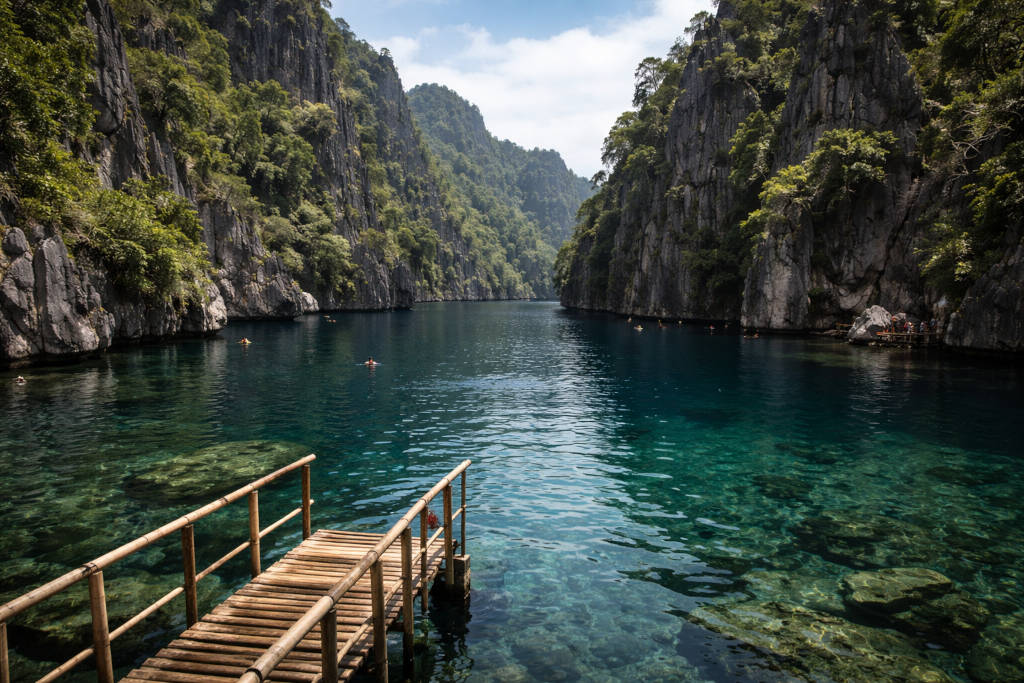
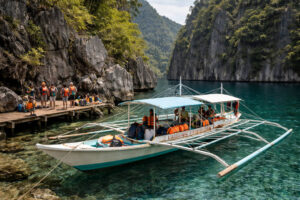 Barracuda Lake is a freshwater lake tucked between limestone cliffs on Coron Island. Most visitors come for calm swimming in clear water and the thermocline effect—water temperature can feel different as depth changes. In plain terms, the surface can feel cooler, then warmer in deeper sections. Not everyone notices it strongly, but it’s common enough that guides mention it during briefings.
The lake is mostly about swimming and floating rather than long snorkeling routes with coral. Some tours allow time to explore near the edges where rock formations are visible underwater, but the focus is usually simple: a controlled swim stop with a dramatic limestone setting.
Reality check: “Clear water” depends on recent weather and how busy it is. When many swimmers are in the water, visibility can drop a bit, especially near entry points where silt gets stirred up.
Where Barracuda Lake Is
Visitors often say “Barracuda Lake is in Coron,” but it helps to be precise for planning. Most travelers stay in Coron Town on Busuanga Island (where the airport is). Barracuda Lake is on Coron Island, a separate island reached by boat on an island-hopping tour. That’s why the lake is usually bundled with other stops like lagoons, snorkeling areas, and a beach lunch.
If a quick official overview is helpful while planning, the provincial tourism page for Coron can provide general destination context: Coron destination information from Palawan tourism.
Reality check: Coron Island is managed with local rules and fees. Expect a structured process for permits and entry, and follow guide instructions closely—this is not a “walk in anytime” spot.
Before You Go: Planning Basics and What to Confirm
 Before booking, lock in the basics that change the whole day: weather window, start time, pick-up rules, fees, and whether Barracuda Lake is truly on the stop list (not all “ultimate” tours are identical). A simple checklist helps:
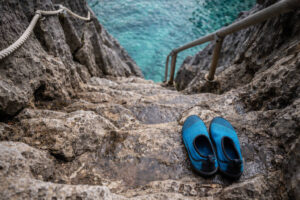
Confirm with your operator: exact itinerary (stop names), which fees are included vs paid on-site, pick-up time range, lunch plan and water provided, rental availability (mask, fins, aqua shoes), and whether a life vest is included for non-swimmers.
Set a realistic pace: A “full-day” island hop can mean multiple wet entries, short walks on sharp limestone, and sun exposure between stops. For families, decide early if the goal is “see many places” or “take it slower and safer.”
If this is a first trip in the country or a first time doing DIY transport, it also helps to skim a general planning refresher like Philippines travel planning guide for first-timers so small details (cash, SIM, weather habits) don’t become last-minute stress.
Reality check: On popular weeks, tours can fill up. Booking ahead helps, but over-planning every minute can backfire—boats and weather don’t always run on a perfect schedule.
How to Get to Coron (Busuanga) From Major Hubs
The usual gateway is Busuanga Airport (USU), which serves Coron-area travelers. From major hubs, the common pattern is:
From Manila
Many travelers fly from Manila to USU, then continue by road to Coron Town. Flight times and baggage rules vary by airline, so it’s worth checking your luggage allowance if carrying fins or bulky gear.
From Cebu and Other Major Hubs
Some routes connect from Cebu directly on certain days/seasons, while others connect through Manila. If a connection is involved, avoid tight same-day island tours—delays can ripple into your entire plan.
By Ferry (When Available)
Some travelers use overnight ferries from Manila as a slower, budget-oriented option. Schedules can change, so check current sailings before you commit: 2GO sailing schedule. If you’re combining buses, ferries, and local rides in one itinerary, this overview can help you map the moving parts: Philippines public transport guide (bus, jeepney, ferry).
Reality check: Whether by flight or ferry, plan buffer time. Arriving the afternoon before your island-hopping day is usually less stressful than landing the same morning.
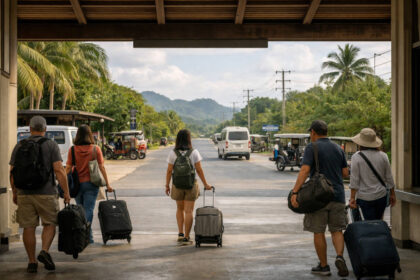
From Busuanga Airport (USU) to Coron Town
USU is on Busuanga Island, while most hotels and tour meet-ups are in Coron Town. The ride is typically straightforward, but the choice affects comfort and timing.
Shared Van
Shared vans are the usual budget option. They may wait briefly for multiple passengers, then drop off around the town center or at hotels on the route. This works well for light luggage and flexible schedules.
Private Transfer
Private transfers cost more but can be simpler for families, groups, or anyone arriving late. A private ride is also helpful if you want a specific stop (ATM, pharmacy, grocery) before reaching your hotel.
Reality check: If your flight lands close to dusk, the trip still works, but don’t expect to run many errands afterward—some services in town slow down earlier than in big cities.
Coron Town to Barracuda Lake: Tours, Departures, and What to Expect
Barracuda Lake is typically visited by joining an island-hopping tour rather than arranging a solo boat for only one stop. Two common options:
Joiner Tour
A joiner tour is the standard choice for most travelers. You share a boat with other guests, follow a fixed-ish route, and split costs. Barracuda Lake is commonly associated with Tour B and often appears in “Super Ultimate” bundles—but names and inclusions vary by operator, so it’s important to confirm the stop list in writing before paying.
Private Boat
A private boat costs more but gives more control over pacing—useful if you want to arrive earlier, minimize time in crowded spots, or adjust for seniors and kids who need longer breaks. If budgeting as a group, compare the private rate against multiple joiner slots plus extra rentals.
Where Tours Usually Depart
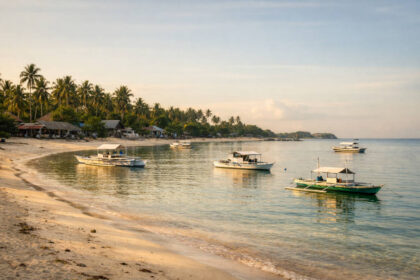
Most boats leave from the town’s main pier/harbor area in Coron Town, often after hotel pick-up or a meet-up near the center. Pick-up policies vary—some operators pick up only within a defined zone, while others ask guests to meet at a set point.
Reality check: “Tour B” is not a legal standard—two operators can use the same tour name but run different stop orders. Always ask: “Is Barracuda Lake included today, and what fees are included?”
Typical Timing: How Long to Stay and a Sample Day in Time Blocks
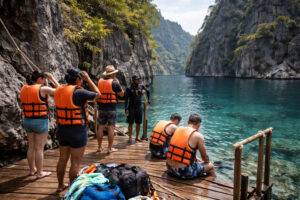 How long to spend at the lake itself depends on the tour schedule and crowd level, but many groups stay around 30–60 minutes at Barracuda Lake. That usually includes the short walk down, gearing up, a swim window, and time to regroup before leaving.
What a Tour B / Super Ultimate Day Often Feels Like
Early morning: hotel pick-up or meet-up, then transfer to the pier.
Mid-morning: first boat ride to Coron Island stops; short swim/snorkel windows at each location.
Late morning to lunch: one or two major highlights (this is often where Barracuda Lake or a lagoon stop fits), then a beach lunch stop with shaded tables.
Afternoon: a few more short stops; travel time between sites can add up.
Late afternoon: return boat ride, then drop-off back in town.
How to Make the Stop More Comfortable
If the lake is crowded on arrival, guides may ask groups to take turns at the entry area. Use that time to adjust your mask, tighten life vest straps, and brief kids on the “no running on limestone” rule before stepping down.
Reality check: The day can feel fast. If the goal is a calm swim at Barracuda Lake, consider asking your operator about stop order or choosing a private boat that can aim for earlier arrivals.
Best Time to Go: Season, Forecasts, and Crowd Control
The best season for Barracuda Lake is tied to the same thing that affects most Coron island-hopping: sea conditions. Dry-season months often bring more stable weather, but wind patterns still matter, and sudden rain can happen any time.
Dry vs Wet Season (Philippine Context)
In general, the drier stretch tends to be easier for boats, while the wetter months can bring more cancellations or choppy rides. For month-by-month expectations and how to read weather patterns for travel, this is a helpful reference: Philippines weather guide and best months to travel.
Best Time of Day
Mornings are usually the calmest for water and lighting, and they can also help with crowd avoidance. If multiple boats arrive together, the entry platform can feel busy; arriving earlier often means more space and a smoother briefing.
What to Check the Night Before
Confirm your pick-up time, the day’s route, and whether any stops are being swapped due to wind or waves. If you’re prone to motion sickness, plan breakfast accordingly and bring medication if needed.
Reality check: Even in the “best” months, boats can be canceled for safety. Keep a flexible Plan B in Coron Town so the day doesn’t feel wasted.
Budget, Fees, Rentals, and Cash Realities
Pricing around Barracuda Lake is best planned in buckets because what you pay can be split between your tour operator and on-site collections. Costs also change by season, group size, and operator policies.
Common Cost Buckets to Expect
1) Tour price: joiner vs private boat rates; may or may not include lunch and basic gear.
2) Permits and entrance fees: Coron Island fees and site fees can be collected separately; confirm if these are included or paid in cash on the day.
3) Environmental fees: some fees are charged per person and may be valid for a set number of days—confirm validity if doing multiple tours.
4) Rentals: mask/snorkel, fins, aqua shoes; sometimes life vests are included, sometimes not.
5) Other activity fees: some itineraries include kayakable areas (often at lagoons), which may have separate rental rules—confirm if you plan to kayak elsewhere on the same day.
6) Tips: not mandatory, but small tips are common if service and safety support were good.
What to Confirm Before Paying
Ask for a simple breakdown: “What is included in the tour price, and what fees are paid on-site?” Also confirm whether lunch includes drinking water, and whether dietary needs can be accommodated.
Cash Practicalities
Coron Town has ATMs, but outages and long lines can happen, especially on busy weekends. It’s safer to bring backup cash and small bills for fees and rentals. Keep cash in a dry bag or waterproof pouch during the tour.
Reality check: The biggest budget surprises usually come from “small” add-ons—separate entrance fees, gear rental, and extra drinks. A little buffer makes the day calmer.
Facilities and Comfort: Toilets, Food, and Water
Island stops are nature-focused, so facilities are limited compared to town. At Barracuda Lake specifically, expect a basic entry area and a short walk down limestone steps—comfort features are not the main point of the site.
Toilets and Changing
Toilets and changing areas (if present) are usually basic, and availability can vary by stop and by day. Many travelers change into swimwear before leaving town and bring a quick-dry towel or cover-up for the boat ride back.
Food and Water
Lunch is commonly served at a beach stop as part of an island-hopping day, not at the lake itself. Bring your own water and consider electrolytes, especially in hot months. If you’re traveling with kids, pack a small snack that won’t melt easily.
What to Pack for Comfort
Aqua shoes (for limestone), rash guard (sun and jellyfish peace of mind), dry bag, reef-safe sunscreen, and a simple first-aid kit (bandages for small scrapes) cover most needs.
Reality check: If anyone in your group needs frequent restroom access, plan this proactively—use facilities in town before pick-up and ask guides which stops have the most reliable toilets.
Safety and Etiquette Notes
Barracuda Lake is manageable for many visitors, but it rewards cautious behavior. The main risks are slips on limestone, overconfidence in open water, and ignoring guide instructions.
Limestone Steps and Footing
The steps and rocks can be sharp and slippery. Aqua shoes help with traction and comfort. For kids, seniors, or anyone unsteady, move slowly, keep one hand free for rails/handholds, and don’t rush because another group is behind.
On-Water Safety (Non-Swimmers, Kids, Seniors)
Non-swimmers can still enjoy Barracuda Lake with a properly fitted life vest, staying near the entry area, and using a buddy system. Kids should be within arm’s reach if they’re not confident swimmers. Seniors or anyone with limited mobility should consider whether the steps feel manageable; a private tour can reduce pressure and allow more time.
Thermocline Comfort
Some swimmers feel a sudden change in temperature when going deeper—often warmer lower down. There’s no need to chase the “layer” if it feels uncomfortable. Stay within your comfort and skill level, and avoid breath-holding dives unless you’re trained and conditions are safe.
Etiquette on Indigenous-Managed Land
Coron Island is managed with local rules and fees. Follow posted signs, pay required fees, keep noise respectful, and avoid touching or taking anything from the area. In the water, avoid stirring up silt and don’t stand on submerged rock edges where it can damage the environment or cause slips.
For broader trip reminders—boat safety, valuables, and common sense rules—this reference can help: travel safety in the Philippines guide.
Reality check: The safest day is the one with fewer “small risks” stacked together—slippery steps, fatigue, heat, and rushing. Slow and steady is the best strategy here.
Pair It With Nearby Stops in Coron
Barracuda Lake is usually one stop in a longer Coron Island-hopping route. If you’re choosing between tour menus, these are common pairing patterns to look for—without assuming a fixed itinerary (always confirm the exact stop list with your operator).
Option 1: Lagoons + Lake + Beach Lunch
A common pairing is Barracuda Lake with a lagoon stop (often Twin Lagoon) and a beach lunch. This combination balances a “swim focus” stop with a scenic paddle/swim area and a rest break onshore.
Option 2: Lake + Wreck Snorkel + Reef Garden
Some routes mix Barracuda Lake with a quick pass at a wreck snorkel area (often called Skeleton Wreck) plus a coral/reef garden stop. This is a good fit for travelers who want variety, but it can feel like many short water entries in one day.
Option 3: A Quieter Pace (Private Boat)
For groups who want fewer stops and more time floating, a private boat can focus on 2–3 places and stretch the swim windows. This is often calmer for families with kids or mixed fitness levels.
For more itinerary ideas and Coron logistics you can mix and match, browse Coron, Palawan travel guides.
Reality check: “Best stops” depend on the day’s conditions. If the sea is rough, operators may switch to safer, more sheltered locations—this is normal and usually the right call.
FAQ: Quick Answers for Planning
Where is Barracuda Lake and why visit?
Barracuda Lake is on Coron Island, reached by boat from Coron Town (Busuanga). People visit for clear freshwater swimming and noticeable temperature layers (thermocline) as depth changes.
Is it included in Tour B / Super Ultimate?
It is commonly included in Tour B and often appears in “Super Ultimate” combinations, but operators can label tours differently. Confirm the exact stop list and ask whether Barracuda Lake is guaranteed for your date.
How do you get there step-by-step from Coron Town?
1) Book a joiner tour or private boat that lists Barracuda Lake. 2) Meet at your pick-up point or the town pier/harbor area. 3) Ride the tour boat to Coron Island. 4) Register/pay required fees as instructed by guides. 5) Walk down the limestone steps to the lake entry area. 6) Swim with a life vest if needed, then regroup at the platform and return to the boat when your guide calls time.
How much should you budget (and what costs change)?
Budget for the tour price plus possible separate Coron Island entrance/permit fees, environmental fees, and gear rentals (mask, fins, aqua shoes). Costs change by season, group size, inclusions (lunch, hotel pick-up), and whether fees are bundled or collected on-site.
How long do you stay and what time of day is best?
Many tours allow about 30–60 minutes at the lake. Mornings often mean calmer water and fewer crowds, especially if your route reaches the lake before multiple boats arrive.
Are there toilets/food?
Facilities are limited on island stops. Toilets (if available) are basic, and meals are usually served at a beach lunch stop rather than at Barracuda Lake itself. Plan to bring water.
Is it safe for non-swimmers/kids/seniors?
It can be safe with the right approach: wear a properly fitted life vest, stay near the entry area, follow the buddy system, and don’t rush on limestone steps. Seniors or anyone with limited mobility should consider whether the steps feel manageable and may prefer a private tour for pacing.
What to bring?
Aqua shoes, rash guard, dry bag, waterproof pouch for cash, towel/cover-up, drinking water, sun protection, and any personal meds. If you have your own mask/snorkel that fits well, bring it for comfort.
What etiquette rules matter most?
Follow local rules and pay required fees, keep noise respectful, don’t leave trash, don’t touch or remove anything, and avoid stirring silt in the water. Listen to guides—rules can change depending on conditions and site management.
What nearby stops pair well?
Common pairings include Twin Lagoon, a wreck snorkel area like Skeleton Wreck, a reef garden stop, and a beach lunch. Exact routes vary daily, so confirm the stop list with your operator before the tour.
Practical next steps: Choose a tour (joiner vs private), confirm whether fees are included, check the weather and sea conditions the night before, bring small bills and backup cash, and pack aqua shoes plus a dry bag.
For more trip ideas in the same planning-first style, explore Bakasyon.ph Travel Guides.